Monthly Archives: April 2008

How Can I Get More Advertisers For My Free Newspaper?

About a year ago, I started publishing a monthly tabloid size newspaper that covers all the arts-entertainment-fun stuff in certain part of a rural Midwest state. It covers 10 counties and is a free distribution of about 10,000 copies per month.

Our publication is full color offers advertising about 1/3 of the price of our competition’s b/w rates. The paper is fantastic and we hear rave reviews from all the people that pick it up. It is distributed in about 100+ locations.

In a small population rural area of the Midwest, our ad prices are very affordable ($220’ish for 1/4 page), but for the ma and pa stores that are around here, they can’t spend that kind of money. Would I be further ahead to do something that is like a $30 business card ad with black ink on colored 11 x 17 copy paper with arts, entertainment, etc. and make $900 per town, per month (or bi-monthly) and do it in 10-15 area towns? This would eliminate the need for full color printing ($1,500+ monthly) and we could just utilize the copier in house to do it for much less.

Or, would I be better to continue to keep offering what we are doing now, but just keep working on the sales and be happy with the sales that we are currently getting or get in the future from the bigger companies?

###

Jay’s Answer:

Another idea: educate the potential advertisers. Create a study of your existing advertisers. Ask them to do ad tracking for you (track the number of calls + in store visits that are a result of the ad). You may need to give your existing advertisers an incentive to do this work for you.

The result is that you will be able to say: For an ad of this size, this type of store generated N traffic.

When selling ad space to mom-and-pops, you’ll be able to ask them to multiply "N" by the average sale they make, and it should become an issue of ROI, not emotion.
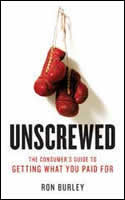
Unscrewed: The Consumer’s Guide To Getting What You Paid For

Unscrewed Book Unscrewed: The Consumer’s Guide To Getting What You Paid For (by Ron Burley) provides some strong tactics for resolving customer service problems where you know you’re in the right. It’s a great way to learn how to market your needs to an organization, guerrilla marketing, and also how to improve your own business’s customer service.

Ron drew upon his background as a broadcast journalist to create 5 key strategy principles:

  1. The Principle (“A company will do only what is in its financial self-interest”). Therefore, if you have a problem, you need to show the company that satisfying your needs is in their best interest.
  2. The Purpose (“The purpose is to reclaim money, assets, or equity while minimizing time and effort”). It’s not about getting (emotionally) even, it’s simply a business transaction.
  3. The Promise (“It will cost much more to ignore me than to take care of me, and I am willing to spend an unlimited amount of tie and energy to get what I’m due”). You’ll be making yourself into a nuisance for the expressed purpose of ensuring other consumers won’t become victimized.
  4. The Power Tools (“Technologies that you use to leverage your position with your opponent”).
  5. The Plan (“…is designed to recover what you are due; it includes an acceptable goal, adversary research, a specific strategy, and an honest assessment of the situation”). The plan matches the situation with your resources to get the result you’re after.

Each of his strategies are based on an in-your-face little-crazy approach. If you threaten a business person with a lawsuit, bodily harm, or to damage their reputation, you’ve eliminated the opportunity for a quick resolution. Instead, you call upon your Free Speech Rights to tell people about your true story. A zealot is hard to ignore.

Each strategy is detailed using a real-life story. He gives a background to the problem, his solution, the result, and an examination of the specific of why exactly the solution worked.

How Aikido Can Save Your Business Marketing

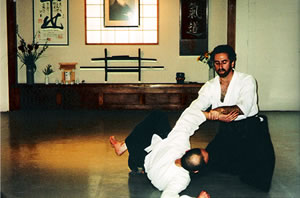
Aikido & Creative Marketing StrategyAikido is a Japanese martial art based on “blending with your opponents’ energy”. As I learned during my 12+ years of training on the mat, victory over others is a matter of physical and mental training. In business, you need to win over your customer prospects and stand out from your competition.

  1. Ground Yourself/Center. Masters are confident and aware of their own expertise. They also know what they don’t know, creating partnerships and learning opportunities to improve their limitations.
  2. Relax. Focus on your goal, but don’t try to be able to do everything well. Do your homework, then let your knowledge pick your best choices through grounded intuition. Know how you use the tools at your disposal, and use them optimally.
  3. Awareness. Know your competition. Don’t be afraid of them. Pay attention to what they are doing and their intentions. Know your own relationship to your business environment.
  4. Extend. Reach out to your customer, but don’t lose your own business “center”. Keep your core values intact, and you’ll be able to authentically offer your services.
  5. Don’t Resist. See what your customer is asking of you, and adjust to their needs. If what you’re doing isn’t working, stop struggling and be willing to experiment with something else.
  6. Pay Attention. Great marketing is about leading, not reacting. Don’t try to play “catch up”, seize new opportunities and anticipate needs.
  7. Connect To Something Larger. See the big picture of what your customers need and how your offering fits into that image. From your customer’s perspective, it’s not all about you, it’s about their needs.
  8. Lose To Win. A great strategist knows when to give (“lose”) to get (“win”). By focusing on a business strategy that builds on your skills, you can adjust your short-term actions to achieve your long-term goals.

Martial arts and marketing mastery both require continually improving and practicing. You must constantly be willing to seek out new information, try it out, and see what works (and why it works). Just because someone offers a technique that works for them doesn’t mean it’s appropriate for you or your business. If you don’t make mistakes, you won’t learn. Seek out senseis (teachers) to get feedback on your practice.


The Art Of LearningIf you’re interested in learning more about martial arts strategy, I recommend “The Art of Learning“. It’s a fascinating introspection of the training necessary to produce martial arts “miracles”, written by a former chess master who became a world champion at Push Hands.

10 Rules For Great Taglines

TaglinesA tagline or a slogan is a phrase (for example, “Just Do Itâ„¢”) intended to get “stuck” in prospects’ heads. The tagline should be short and memorable, like a great piece of haiku.

The following are my rules for creating great taglines:

  1. Don’t be “cute”. Cute often is seen as “cheesy”.
  2. Do focus on the benefit to the customer.
  3. Don’t repeat any of the words in your company’s name.
  4. Do spend time with a thesaurus.
  5. Don’t use more than 7 words (human short term memory limit).
  6. Do use short words.
  7. Don’t use well-worn phrases.
  8. Do use an emotion word to invoke the benefit (pain, pleasure, safety, etc.)
  9. Don’t think a tagline replaces good marketing strategy.
  10. Do ask your existing best clients what they think of your tagline.

The best way to get something to “stick” is to capture your potential customer’s problem and pain and show the solution. Don’t write a tagline from the perspective of how great you are – no one really cares.

Let’s say I’m looking to hire the best Realtor that I can find to sell my house. I’m looking for someone who: has a proven track record, is a great listener, is a great negotiator, and can get me a great deal. Period.

I filter every Realtor that I meet against my list. Which of the following Realtor taglines would be most likely to appeal to me?

  • Your Realtor With Heart
  • Finding Your Dream Home
  • Your Realtor For Life
  • I Know Your Neighborhood
  • The Hardest Working Realtor You’ll Ever Meet
  • Selling Homes Is All I Do