
Monthly Archives: August 2008

Derren Brown – Subliminal Advertising

I had not heard of Derren Brown until I saw this video. The “setup” is two British advertising experts are given a very short time to craft an artificial ad for a service. I won’t spoil the video, but this video claims to show the power of subliminal advertising.

After viewing it, I proceeded learn more about Derren and watch many others of his videos. He’s quite entertaining.

The Little Touches That Matter

Orkin Insect Zoo Sign at Smithsonian Museum
Orkin Insect Zoo (!) Sign at Smithsonian Museum

I’ve been noticing a growing trend of restaurant dining inconsistencies. For example, the Station House Cafe makes a point to talk about how much it supports the local economy, uses the freshest organic ingredients, and is environmentally friendly:

“We subscribe to sustainable agricultural practices and use premium ingredients, including local fish and meats and organic vegetables from our own garden.

Our beef, pork and lamb are from Niman Ranch and raised on chemical-free pastures, without hormones or antibiotics. Our chicken is fresh, free-range “Rocky” birds raised in neighboring Petaluma, also without hormones or antibiotics…”

So, when I was sitting at my table at the restaurant waiting for my meal, I noticed the condiments: salt, pepper, ketchup, mustard, etc. They were all from a generic restaurant supplier. Why wasn’t the salt “sea salt”? Why wasn’t ketchup made from local organic tomatoes? Why was the packaging in plastic bottles? Given their concern for sustainability, why weren’t the napkins and to-go containers made with recycled paper or the plastic to-go utensils made from compostable/recycled usual plastic?

When your business takes the effort to stress certain values, you’re saying how important this value is to you and educating others why they should care about it. People who don’t know care about the values (they just want your product or service) might be open to learning something new. People who care about these values will be curious to see if you’re self-consistent: Are you walking your talk? If not, your message will be diminished. Make sure that your business values are carried through consistently.

Plumb-Wrong Advertising

Live Plumbing Advertisement What’s wrong with this advertisement? From my marketing strategy perspective, it’s focusing on their service and not the benefit to the prospective consumer.
How many property owners think about their sewer pipes? Why would they? Sewer pipes are something are “out of sight/out of mind” and seldom fail.

So, how should the plumber advertise this service?

First, let’s figure out the basic marketing strategy for this plumber:

For local property owners
who need problem-free plumbing
we inspect sewer lines
to prevent unpleasant surprises
unlike traditional plumbers that only fix the mess
our offering is a free consultation/estimate/second opinion/video inspection.

Now, let’s rewrite the headline, “Do you really know what’s in your sewer pipes…and if they leak? Do you want to know?” Here are some options:

  • Homeowners: Prevent A Sewer Catastrophe! [key words are: homeowners (who), prevent/catastrophe (pain), and sewer (what)]
  • Is Your Plumbing About To Explode? [key words: plumbing (what) and explode (pain)]
  • How’s The Health Your Older Home’s Plumbing? [key words: plumbing (what), health/older home (pain)]

Confessions of a Serial Entrepreneur

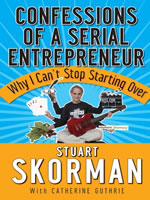
Click to purchase Confessions of a Serial Entrepreneur Book at Amazon What struck me about Stuart Skorman’s book (subtitled, “Why I Can’t Stop Starting Over”) is his creative need to start new businesses and his (growing) wisdom about business. Stuart’s better-known accomplishments are launching Reel.com (sold for $100M) and Elephant Pharmacy.

Stuart’s smarts, creativity, luck, risk-taking, and finances are well-described. The book is written in a conversational style – it’s as if you’re sitting down with him (or going for a walk) and he’s mentoring you on customer service and startup business logic. He not only describes his business life, but also his personal life (and the give-and-take he learned). The best part of the book is his hard-won pearls of wisdom that end each chapter:

  • Why I rarely hire MBAs (they often don’t understand the needs for creativity, struggle, and sacrifice)
  • Customers can be your best teachers (by intimately knowing your customers likes and dislikes you have a better chance for success)
  • Decisions should be made by the person with the best resum?© (Hire well and entrust the right person make the right choices on your behalf)
  • Three rules to winning in poker and business (Be aggressive, be conservative, be opportunistic)
  • Do’s and don’ts for choosing a business (base it on logic, stick with the familiar, prioritize fun, start small, do something established, know your risk tolerance, and focus on short-term goals)
  • Create a second bottom line for your idealism (calculate the cost of your idealism from your profitability)
  • Avoid creativity at all costs (where possible, reuse existing well-tested solutions to your problems. Creativity is expensive (but attention-getting)).
  • How to make the transition from a big company to a start-up (start small, do your homework, work for a startup first, understand your motivation, and be financially prepared).