Monthly Archives: February 2012

A Tagline For an Italian Preschool Flyer?

I am needing a tagline for our children’s preschool flyer that is exploring Italy. Do you have any suggestions?

###

Jay’s Answer:  Technically you’re not looking for a tagline (which describes a unique benefit to a company or organization) – you’re looking for a headline for attracting attention to something you’re “selling”. And the headline isn’t for the preschoolers – it’s to excite their parents. Some ideas to play with:

  • Let’s Pretend Travelling To Rome
  • Here Comes Rome & Pizza!
  • Andiamo! (which means let’s go in Italian)

Help Me Name My Bakery in India

My shop’s name is Raj Baker’s. We made fresh cakes.cookies n biscuits in india. I want to put the best tagline for my cakes n pastries…so what it should be?

###

Jay’s Answer:   The best tagline conveys a clear unique benefit to your prospective customers and it dovetails with your business name. If your business name is: Hitesh’s Fresh Cake & Pastries, then your tagline could be something like: Baked daily with organic ingredients (if you do bake with organic ingredients daily and if your customers are likely to care). But notice that the tagline doesn’t repeat cake & pastries – since that’s in your business name.

The best taglines come from a deep understanding of both the message/image you wish to present, and what your clients deeply care about. Without these two pieces of information, it’s either a guessing game or a generic phrase that resonates with no one.

Here are a couple of examples to get you started:

  • Smell The Freshness
  • We Are Deliciousness


How to Start Cross-Marketing My Business?

Hi i read an article on cross marketing,  how would i go about doing this what offers can i give the other business for advertising or promoting my company? i run a health club, and im looking to do some cross-marketing with some electronic stores. what do you think would work?

###

Jay’s Answer:   Think of cross-marketing as a partnership. You want something from them. They want something from you. Start by thinking what you can offer your partner: email list? Spotlight in marketing materials? A flyer in your foyer? A special evening that you host for your VIP clients?

Next, think of what they have that you want. A flyer? Discounted product?

That’s the what. Then the “who” – are the people likely to buy from them also the people you have as clients? How do you know? How exclusive are your clients? Your partner will want to know numbers: ages, demographics, buying habits, etc. You’ll likewise want to know about their clients.

Finally the offer. What’s the quid-pro-quo? How will you measure success of the partnership? How long will you stay partners? Will you be exclusive to each other? How can each of you back out (and why)? How much $ will you each invest in the partnership?

Marketing With Measured Steps

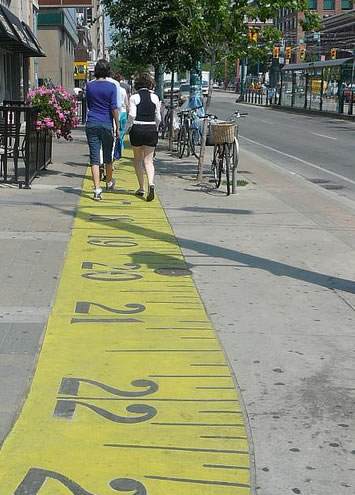
Marketing Measured Steps

(Photo by Steve Harris)

It seems that everyone is telling you that you need to upgrade to the latest and greatest. A new hosting server. New contact manager software. New business cards. New flyers. An updated website. Tweeting around the clock. If you don’t keep moving (your business) forward, you’re likely dying. But is it true?

Since I don’t believe in giving advice without first-hand knowledge, I recently decided to change how I send out my monthly newsletter. I looked at a number of options, and decided to try MailChimp. It looks great and priced right. Since I’ve helped some clients tweak their MailChimp newsletters, I thought it would be a good experiment to try out. I copied over my text, my graphics, created new newsletter templates, imported contact lists, etc. After many hours, I was pleased with my results. And just before I was about to send out latest newsletter, I remembered to test it. I emailed it to a number of different email accounts and was surprised to see that the newsletter was labelled “spam” by my main email account! I dug deeper and figured out the links in the newsletter that MailChimp creates look spam-ish. So I tossed all my work away. A failed experiment? Hardly – I deeply learned the abilities of some new software and can speak in-depth about its abilities and even figured a way to use some of the features to my benefit.

The latest “thing” is simply that – the newest version. Jumping to use the new thing has a higher risk/reward. The “leading edge” is often called the “bleeding edge”, since you’re blazing new trails and learning new solutions and problems.

Definitely continue to innovate your business and marketing. But measure the results of the actions before you fully commit to ensure your steps are taking to your desired outcome.

Speak With Passion: Slides

Writing a Speech

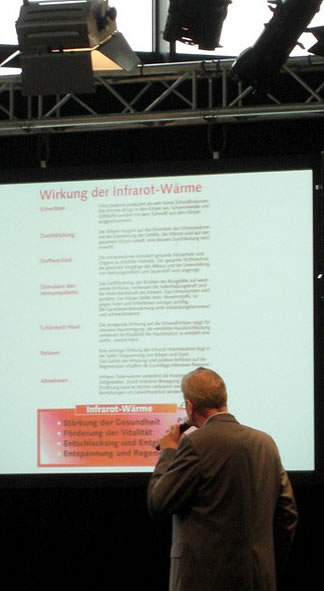
(Photo by Beate)

Whether you use Keynote, PowerPoint, Prezi, or your own favorite presentation tool, it’s vital that you think about the effect your slides will likely have on your audience.

When a new slide is flashed on the screen, people’s eyes will naturally gravitate to it. That means for a split second they’re likely not to be listening to you – they’ll be looking at the slide. In your presentation, give them time to absorb the new image/text, otherwise your words are likely to missed.

If your slide contains text, you need to give your audience time extra time to read the words. You can draw their attention to some key points (hint: don’t read the slide to them!), but realize that if they’re reading it’s hard for them to simultaneously listen to you. So, plan out how you wish to make your point – visually or aurally.

If you’re trying to make an emotional point, use few or no words on your slides – use emotional images instead. The images are easily “absorbed” by your audience and your speech will become more like a movie narration (an intimate experience) rather than a professional speech. In fact the movie analogy is quite appropriate – you want to script what you want your audience to see/do at each step in your presentation. When you move your hands or body, people follow your motions. If you’re looking away from the audience, they’ll follow your gaze. If you’re handing out paper, they’re looking for the handout.

Imagine if people tuned out your voice when talking and only looked at your slides (which naturally does happen when people shift their attention) – what would they remember about your message? To give a speech with passion, guide your audience on a journey, rather than tell them information.

It’s the Marketing Story, Stupid!

Wine Bottles On Display

(Photo by Alex Brown)

Imagine you’re looking to purchase a bottle of wine as a gift for the host of a party. You’ve narrowed it down to two bottles in your budget that look good. Both of them are well-recommended by the wine store owner. But then she tells you that one of the bottles comes from a small family vineyard, continuously owned for four generations. The wine is produced in small batches, the wine labels designed by an artist in their family, and the bottles are made from recycled glass. The other bottle contains equally delicious and affordable wine, produced by a winery you’re heard of. Which would you buy?

If you’re like most people, you’d chose the wine from the small family vineyard. And you’d feel good about doing so – knowing that you’re supporting a small family operation, and feeling a part of that tradition through your purchase. You’ll probably also share the story of the bottle with the party’s host – showing that you spent time thinking about what to purchase, and including their interest in the story as well.

When you’re marketing your product or service, realize that your competition’s quality may be as good as yours. The price may be as good. Ditto the reputation. So, how can you distinguish your offering from others? With a good great marketing story that lets people know what story they are also buying as part of the purchase. Consider that most people, after visiting your website’s home page, next visit your “About” page. Why? Because they want to know your story, and to somehow see if they “connect” to you. That’s why you should include details not only about your offering, but relevant details about you, your values, your aesthetics, etc.

First, focus on producing a great product or service. But to sell it competitively, develop a story that explains what people are buying into. This will help you to satisfy people’s analytic and emotional needs.