Monthly Archives: December 2012

A Tagline For Our University Bookstore?

We sell university books, school books and stationery and a lot more. Can you tell us a tagline that will attract more customers?

###

Jay’s Answer: A tagline alone won’t suddenly attract customers. A tagline may help people quickly see what makes you different and/or clearly identify what you sell.

Your website doesn’t describe what products/services you offer, nor give people a reason to purchase from you. So, my first suggestion is to clearly identify what you sell and to who. Where are they located? What makes you better/different from your competition? If you are selling the same things as others, then figure out ways to differentiate your services (don’t simply try to have the lowest cost products – as a small business, it’s almost always a losing proposition).

Also, if everyone is selling the same things, you need to compete on services. What can you do for people that they can’t easily do themselves? Can you deliver books in the middle of the night? Will you trade older editions for newer books? Will you offer a digital copy of the book for a minimal extra cost? Can you team up with a local tutoring service?

My suggestion is to focus on your marketing strategy first. Then, integrate your unique benefit into your tagline, making sure that it fits with your company’s name.

Need A Good Pet Brand (company) Name

I’m looking to open an online business selling pet, mostly dog treats like bully sticks, rawhide and and in a small amount pet things for the house like puppy pads. The bully sticks are 100% naturals, they come straight from free-range grass fed Brazilian cattle. They are processed in a human grade facility and are growth hormone and anti-biotic free!

###

Jay’s Answer: “Treat Your Dog Well” plays off the desires for health, pride, and love.

Speak With Passion: An Opportunity For Personal Growth

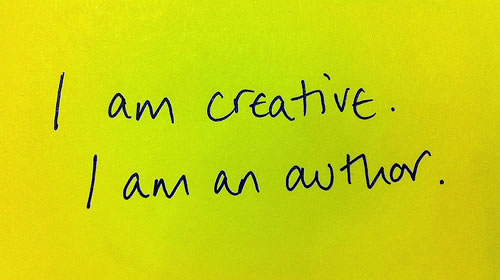
Affirmations

(Photo by Joanna Penn)

If you’re like most speakers, when you’re preparing to give a speech you’re focused on memorizing your speech and your delivery. You  know that a great speech is a gift to your audience. But there’s also a way to give yourself a huge gift as a side-effect of your speech.

Before you take the stage, think of a single word that conveys an personally important aspirational meaning to you, for example: confidence, joy, breathe, smile, or success. It’s important that it’s a single word, since you literally only have a second for this technique. Choose a word with a positive connotation that’s truly important – something that you want more of in your life, or a feeling that you want to convey to your audience. Got your word?

As you come onto the stage, remember your word fondly. Don’t force the word through mentally gritted teeth. Smile inwardly. Think of the experience of having more of this word in your life. Now begin your speech.

As your speech has natural breaks for you to breathe or for people to applaud to show slides, remember your word again.

As you end your speech (or even, after you give your speech and before you leave the stage), remember the word again. Don’t force this drill. Remember, it’s a gift you’re giving to yourself.

So, how can remembering a single word change your life? While you’re onstage, your audience has given you a huge gift – their attention. This attention is a sea of opportunity for you energetically. Everyone wants to hear a great speech, so they’re sending you positive hopeful thoughts. By using an affirmation, you’re using helping to ground their energy in your personal growth.

If you’re not a “new-agey” person, who thinks this is all silly mumbo-jumbo, I encourage you to suspend your disbelief. Consider this story:

An American scientist once visited the offices of the great Nobel prize-winning physicist, Niels Bohr, in Copenhagen. He was amazed to find that over Bohr’s desk was a horseshoe, securely nailed to the wall, with the open end up in the approved manner (so it would catch the good luck and not let it spill out). The American said with a nervous laugh, “Surely you don’t believe the horseshoe will bring you good luck, do you, Professor Bohr? After all, as a scientist –”

Bohr chuckled.

“I believe no such thing, my good friend. Not at all. I am scarcely likely to believe in such foolish nonsense. However, I am told that a horseshoe will bring you good luck whether you believe in it or not.”


“They Say”

The Voice of Marketing

(Photo by Tyler Hoff)

They say that the next must-have smartphone app is…” “They say that the best style for next season is…” Who are they and what voice should you use in your marketing?

If you’re a well-respected brand leader, than your voice is “I” or “we” (“I’m predicting that…” or “We will be focusing our next product line on…”). People want to hear from the leader what’s next straight from the source. It makes them feel part of the conversation. That’s why Facebook business pages for brand leaders are generally well-liked by large numbers – people want to be in the know.

If you’re just starting out then your voice is “they” (“They say that the best widgets are made by…”). Your voice doesn’t have authority, but you want to leverage well respected “names” to support your own voice. So you point to others for validation, and include your offering as part of the conversation (“…so that’s why we’re proud to offer you…”).

If you’re trying to create a social movement, your voice is “us” (“If you care about …. join us …”). You’re not establishing yourself as a leader, but you’re a part of the leading edge people who are already committing to take action.

If you’re trying to appeal to the leading edge influencers, use the “you” voice (“You are wise to notice that our new offering…”). Influencers want to see things first, so use a voice that recognizes their specialness.

If you’re trying to appeal to a mass market, use the “they” voice (“They know value when they see it”). Point to the leaders who already have validated it to have the “followers” feel like they’re not risking anything to purchase your product or service.

If you’re appealing to the laggers (slow-to-change), use the “us” voice (“Join us and see how much better…”). The late-to-change group want no risk, and easy adoption. Make your offering the obvious best-of-class choice.

They say that great marketing begins with a great offer. I say that great marketing begins from the right point of view.

Avoid Marketing Blind

Avoiding Marketing Blindness

(Photo by Polina Sergeeva)

If you’re just starting a new business, the biggest mistake you’re likely to make in your marketing is to be blind to the business landscape. You know what you’re offering, you know why it’s valuable, and you know why people need to buy it now. Or do you?

Odds are you’re too close to your business and too far from your client’s mindset. While you may think what you’re offering is the best thing (by far) on the market, your prospective customer knows nothing about you and doesn’t trust in what you’re saying. Being too much in your own world is a symptom of not actively being in a dialogue with prospective customers. For example, how often do you meet people face-to-face who may be interested in what you’re selling? When you do, are you focused on selling them, or are you asking them questions about their needs and their decision-making process? Are you listening to the words they use? Are you looking not just at what they say but also what they do (or have done)?

Before you launch your offering, have you tested your marketing on a wide range of prospective customers? Is your message blindingly obvious or do you need to help explain it so people “get it”? Are you testing not just with your inner (supportive) circle but also with complete strangers (who are more like your target market)? Are you not just getting nods of recognition but also immediate confirmation that you’ve hit the bullseye?

Are you having your peers compare your marketing efforts to those of your competition? Is your message more focused, better written, and graphically easier to understand? Is your call-to-action compelling? Is your value proposition crystal-clear? Is the next step you want your prospect to take clearly articulated?

If you find yourself getting frustrated that others “just aren’t getting it” – consider that you’re either ahead of your time or woefully mistaken. In both cases, you’re wrong. The market is right. If someone won’t buy what you’re selling, you’re better off finding out about it sooner rather than later. Don’t be blind to your own ignorance.