Monthly Archives: June 2013

Need Name For Yoga Teaching Business

I am a certified yoga instructor and would like to market myself to teach one-on-one private lessons or small group lessons in someone’s home. I need a catch name/tagline to put on my business cards rather than just my name. Any ideas?

###

Jay’s Answer:

  • Yogini At Your Door
  • Yoga, Delivered
  • Yoga Everywhere


Need A Tag Line For A Medical Device Company

We are a private and independent medical device distributor that represents high technology medical devices that make a difference to people’s lives. We are across a broad spectrum of categories.. We recently came up with “people live better lives because of what we do”. We like this, but it is too long to use in marketing collateral like business cards at letterheads etc. Any ideas????

###

Jay’s Answer: You could rework your tagline to: We Make People’s Lives Better

Tagline for Technical Translation

I am looking for a tag line for a technical translation company whose core value is building stable employment for the employees through solid relationships with their customers.

###

Jay’s Answer:

  • We Ensure Everyone Understands You
  • Quick & Accurate. Long-Term Satisfaction.
  • Technical Accuracy With a Personal Touch

Learn From No

Learn From No Marketing

(Photo by Steve Boneham)

Congratulations! You got the courage to pitch a new proposal that you arranged with a prospective client that you cold-called. You give a strong pitch. You watch your client smiling and nodding along with you. And when it comes time to ask for the deal, you hear a “no”.

Quick Quiz: What do you do next?

A) Quickly leave. After all time is money, and trying to convince someone who’s not interested won’t make a whit of difference.

B) Repeat yourself. You know that you have the best value in the market, and the person sitting across from you likely doesn’t “get it”. So, repeat your key points and try to convince them that their “no” is wrong.

C) Ask why. You can’t satisfy someone’s needs if you don’t know what they are.

You should ask “Why did you say ‘No’?”. You’ve already invested your time and your prospect’s. If you leave without understanding what you missed, you’ve truly wasted your time. Learning from no’s will improve your presentation (even if you can’t satisfy their need) and fine-tune your marketing effort. When we hear a “yes”, we seldom think to dig deeper – we just think that we should repeat our actions and we’ll get another “yes”.

By asking for an explanation for a no, you create a dialogue. Up until now, you’ve probably been in selling-mode – a straightforward presentation when you tell what you have and wait for the yes. But by creating a dialogue you can better gauge your prospect’s true needs, timing, and budget. You might not win the sale today, but you’ll leave the door open for the possibility of re-connecting, and re-presenting a more appropriate offer to your client.

It’s not easy to keep going after your hear “no”. We’re trained to think that a “no” reflects badly upon us personally. Remember that someone else’s “no” may become a “yes” after we learned from our interaction.

(Aside: If you’re having problems getting to hear a “no”, read my previous article: Go For No.)

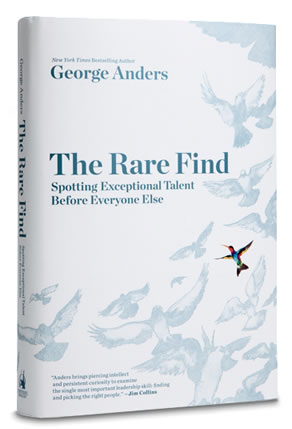
The Rare Find

The Rare Find Book Cover

The Rare Find is about identifying (and then hiring) people who are exceptional. If you’re an employer looking for a better way to attract and interview “stars”, this is a great read. However, many of the ideas contained are also ideal for marketing your business as well as for your own job application.

Exceptional talent isn’t always obvious. If someone did a similar task for a previous employer, then it’s possible they may be able to repeat their success. However, sometimes the true skill is really an aptitude that isn’t easily taught, and is instead found in related fields (sport competition, military training, improvisational acting, debating, etc.).

Dr. James Weiss (associate dean at Johns Hopkins) seeks to get to the root of a medical school candidate’s character by asking applicants to answer questions about their rewarding experiences, overcoming adversity, areas of pride, and moments of exclusion. These same questions can be asked of your job applicants, but the answers are also great fodder for developing a compelling “About Me” bio for your business.

Champions do three things right: they take a lot of small risks, they make the most of their fortunate hunches, and they let go of mistakes before these become ruinously costly. These same personal qualities can likewise be applied to your business: keep learning and keep evolving. Focus on the question “What can go right?” and not “What can go wrong?”

Resumes of some exceptional talent don’t necessarily look typical. There may be a number of seemingly unrelated jobs and talents. People may leave jobs after a relatively short time because they weren’t challenged. They seem to bounce from thing-to-thing and never “grow up”. But these people are developing a breadth and depth of experience that your typical employee doesn’t have. And the best have “grit” – the ability to persist (and in some cases, thrive) in the face of daunting challenges.

Interviewers tend to also not know how to interview people well. They tend to want to ask “safe questions” and hear about successes. They want their applicants to be clones of others that are already employed (so they’ll fit in easily). Interviews don’t actually test the ability of an applicant to do the job – just the ability to sell them self.

If you’re trying to grow your team (or non-profit), ensure you create big, shared goals. Big goals keep talented people ever-striving. Shared goals keep teams cohesive. Stories about these goals will help instill a deeper culture, and give new team members a way to grasp the depth of the shared values.

If you’re trying to attract new employees (or even clients), consider a contest that’ll attract the right people to enter. Passionate people. Smart people. Under-challenged people. People from across the globe. A contest will create a community of like-minded members for you to communicate with (or hire), and at a fraction of the cost (and time) you would normally take to attract this tribe.

There’s no guarantee that your exceptional talent (or business) will necessarily be highly rewarded by following these ideas. But you’ll be better positioned to be noticed when the time is right.
Pure Marketing

Marketing Pure vs. Hybrid

(Photo by Tyler Howarth)

Let’s say you’re selling a product (or service) that you’ve branded as 100% pure (based on ingredients or functionality). Sales are down. Is now the right time to introduce a new “hybrid” product (or service)?

Whenever you introduce something new, you’ll get fresh eyes – people who are looking for something new/interesting/tasty. These new eyes may convert into new customers (and perhaps new rabid fans) as well. But your gain of new customers means that you’ll likely lose some of your old/familiar/trusted customers.

Whenever you sell a product that’s “pure” you attract a couple of different groups of people: idealists – those that are looking for the minimum product that they need (no extra fluff or risk) and people susceptible to allergic reactions (the extra ingredient actually causes problems for them). Both of these groups of people can become staunch fans – since they know how rare it is to find “pure”. As a manufacturer, it’s so tempting to add additional ingredients to: save money, increase flavor, or differentiate it from the competition.

When you hybridize a pure product, you’re likely to damage your brand promise. Before you guaranteed that things were simple, pure, minimal, and efficient. Now, you’re backtracking on your promise. Maybe you hedge your bet, and offer both a pure and hybrid product. But now your hardcore fans may not trust you – maybe your organic and pesticide-treated fruit will get mixed up. Maybe your all-beef products will become tainted with pork. Or your pure chocolate bars will be exposed to peanuts. Suddenly your “guaranteed pure” brand is less “safe”, and your trustworthiness (whether rightly or wrongly) is at stake.

There’s nothing wrong about evolving your offering to grow your business or better target prospective customers. But your offering must fit with your “brand umbrella” – people need to know what you stand for (and why). If you need to experiment with new offerings, consider starting a new brand (with a new brand promise). You won’t have the benefit of leaning on an existing well-known name but you also won’t be sacrificing your “old” for something “new”.