Category Archives: Creative Business Ideas

Set Your Business FREE

Freemium Marketing

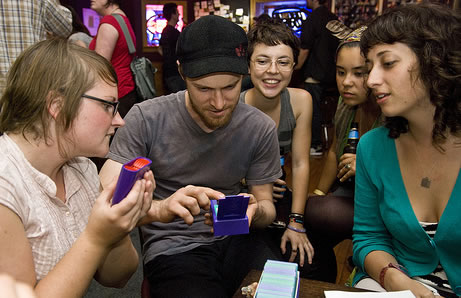
(Photo by Ramsey Beyer)

If your business offering is technologically based (ebooks, video, software, games, webinars, etc.), you might consider doing something very radical – giving your product away for free. This “Freemium” business model is growing in popularity for good reason – the best way to see if you like something is to try it (for free) to see for yourself.

The common “free” model is to offer a free trial to your service or a limited free access to your product (for 7-30 days). During the time people will not only get to try your product/service, but also see how you interact with them (customer support, online forums, etc.). The “try-before-you-buy” model is proven to remove the resistance people have to paying for something “sight unseen” (it’s not the same to try something with your own hands, rather than trust white papers and expert reviews).

A huge step up from this is to offer your basic product/service for free. Nada. Zilch. No fine print. You make money in upgrades from the basic service after people have fallen in love with it and need more. This is the current model for some email providers, video game producers, and software developers and more famously started with companies that sold razor blades (who gave away the razor, knowing you’d need to replace it with one of their blades). Giving away your product/service should only be done if the incremental cost to adding a new customer is basically zero: you’re only adding someone to your database and sharing a downloadable digital product link.

By making your business revolve around FREE, it’ll force you to be proactively listening to what people desperately need . You need to treat your free offering as if people are paying for it (keeping it up-to-date, bug-free, and visually attractive) – since it’s the first introduction to your business. But to convince someone to upgrade from FREE to paid should be carefully analyzed to identify the high quality solution to your customer’s “pain points” that they’ll pay for.


Marketing Fear Vs. Risk (in 3 Steps)

Marketing Fear Vs. Risk

(Photo by epSos.de)

When marketing your product or services, your prospective customers are thinking about the risk of using or not using your offerings. If your offering is inexpensive, then the risk isn’t much. But the more your offering costs, the more fear your pricing might invoke. Here’s what to do.

1) Determine your competitive positioning. Are you charging a premium price for a premium offering or a low-ball price to attract attention? Are you offering similar pricing for similar value or high-end service for less?

2) Determine your customer’s risk of not choosing. We often get fixated on comparing our offering to our competition’s. But the truth is that your customer’s need may not be urgent, so not-choosing is a viable option. What’s the true cost for your customer of not buying now?

3) Determine your lifetime value. Are you trying to sell as many widgets to as many people as possible or are you trying to develop a long-term relationship with your customer to both spread the word about your offering and to have them come back when they’re ready for more of what you’re offering?

With these three pieces of information, you have the core to develop your fear/risk message. For example, if you’re pricing is competitive (or less than the competition), then the cost of choosing you is less. Your customer is thinking, “Is this really as good as the others?” Your message should logically present a competitive matrix showing how you stack up.

If you’re offering a premium product at a premium price, then the risk is a lot more. Paying more for basically the same thing seems quite risky/expensive, so your message needs to focus on calming the fear. “Yes our product costs more, and here’s why you’ll be glad you paid extra…” is the message you need to convey both logically and emotionally.

If you have a lot of competition, then psychologically most people will take the default choice – do nothing (studies have shown that the more options, the fewer the sales). So your message needs to convey two things: “Why you will regret not choosing today” and “Why our service is the naturally better choice”. You need to move your prospect to act now (because a confused prospect tends not to return to make a choice) and convince them why they’ll be happy for a long time (so making their decision will be rewarded both short- and long-term).

If your customer is fearful about the future, show them the way to achieve their dreams starting today. If your customer is fearful about the present, focus their attention on their future happiness.


Speak With Passion: How To Establish Your Guru-ness

How to Become a Speaking Guru

(Photo by John Haslam)

Whether you’re starting out or have been giving speeches for a while, you’re likely want to have people in your audience take note of what you say. And people pay extra-attention to people who are experts in their field. So how can you establish your own guru-ness in your talk?

There are 3 basic ways to show you’re the expert:

1. Say “I’m the expert and here’s why…” This borders on boasting and requires the most confidence in you as a speaker. The key is to pick one or two expert credentials that your audience cares about, and not bore your audience with a recitation of your professional resumé.

2. Have others say “You’re the expert and here’s why…” This is the most familiar way people are introduced onto stage, “So-and-so has won multiple awards, been to the White House many times, consults with heads of state, etc.”. Even if this introduction was written by the speaker (for the emcee) it comes across as more humble. By leaving the bragging for others to do, you save valuable time in your speech to convey your big idea.

3. Show you’re the expert at something else entirely. Let’s say you’re giving a speech on designing buildings. While you’ve been an architect for 20 years, won multiple awards, and are highly sought after, what many people don’t know is that you’re also a quilter, who has (quietly) made and donated quilts to homeless people for years. If your speech can connect quilting to architecture, you’ve pulled off a double-win: you’ve both humanized your speech (sharing something special) and made your speech more memorable (if everyone else is talking about architecture, and your speech begins with quilting, you’ve got an immediate edge). By talking about something that you’re also passionate about, you clearly articulate your multiple talents.

For your next speech, if you will be an unfamiliar face, carefully consider how you want to be introduced and remembered.

Make Marketing a Game

Marketing Gamification

(Photo by Ernie)

When we reach out to our prospective customers it usually feels like work: identifying core needs, creating an appropriate message, spreading the message, fielding inquiries, and refining the message for the future. It’s work for you and it’s work for your prospects (they’re generally contacting you because you’re helping them solve a problem). What if you could make marketing FUN for everyone?

We know games can be fun, immersive, and naturally viral (in 2011, spending on US games totaled $21.6 billion). Gamification is the process of applying elements of game play to real-world problems (including your marketing efforts) using such simple techniques as: achievement badges/levels, progress bars, and user challenges. If you have a Facebook page, you’re focused on the number of likes/friends. If you have a cell phone, you might be focused on your Foursquare badges. If you have a LinkedIn profile, you may have been subtly coerced to complete your profile (seeing how close you were to 100% completed). We seek to get confirmation that we’re liked or authorities in our social circles. You can leverage this same feeling in your own marketing.

The first step is to create goals that your prospective customers care about: fame, reputation, (financial) reward, competition, charitable giving, etc. Ideally these goals should be in alignment with your company’s mission and offerings. If you’re not sure, ask your customers for input.

Create tangible milestones to achieve these goals (points, badges, trophies, etc.). The milestones should initially be easily achieved, then gradually stretched out to increase the “special-ness” of achieving the goals. If it takes just a few minutes and anyone can achieve the goals, then the achievement is a big deal. This is the essence of great game levels – make it easy for people to learn the basics, then ramp up the challenge to reward the efforts.

Now you need to create the game itself – the fun part. It could be a smartphone app that you give away, an online game, a treasure hunt, quizzes, etc. But it’s got to be fun to both play and fun to watch from the sidelines. Your marketing effort should initially be focused on creating the experience, but ongoing, it needs to be encouraging the spectators/audience. Make what people who play do visible and make your (social) marketing about cheering on those that are “daring enough” to play. By highlighting them, you both win.

If the game you create is fun in its own way (not just for a narrow audience) then you’ll likely get a viral bump, as people will want to share the fun with their friends. But make sure that the game aligns with your business model (and has measurable analytics), otherwise you’ll quickly find yourself spending time in the game business, but not growing your company’s success.

Seeding Doubt In Your Marketing

Doubt Your Marketing?

(Photo by Christine)

Doubt is like a psychological cancer. First you have a smidgen of doubt, then you’re starting to focus on the doubt itself, until it can take over all of your attention. But how can you control doubt in your own business marketing?

First, start with your existing business relationships. If a prospect has any doubt about your capabilities, unless you have a plan to address it, the doubt will become self-fulfilling. That means that if you have any doubt about your ability to take care of your customer, either get some colleagues to help bolster your weaknesses or focus on your unique expertise, and leave what you don’t do well to others.

When marketing your business, if you’ve ever heard a client say, “I wish I knew about you sooner” – it’s time to plant the seeds of doubt in your marketing copy. For example, instead of simply saying your printing business has the latest equipment and offers 24 hour turnaround, tell people how much stress they can avoid dealing with you. For example:

  • Doesn’t your dog deserve Alpo?
  • Cooks who know trust Crisco
  • When you absolutely, positively have to have it overnight (FedEx)
  • Invest with confidence (T. Rowe Price)
  • Imagine it. Done. (Unisys)
  • Always low prices. Always. (Walmart)

The key to seeding doubt is to be able to understand the #1 emotional fear of your prospective customers. What keeps them up at night? If you can touch upon the fear (either directly or by hinting at it), then your marketing will resonate inside them and cause an emotional response. To be effective, you need a one-two punch: raise the doubt and show your offering removes the doubt completely.


If you’re in the throws of doubt, here are some tips to get you out of the potentially paralyzing downward spiral:

  • Is there anything I can do about this doubt? If there is, take action.
  • Have any of my assumptions changed?. If you already made a choice based on available information, and those assumptions are still valid, then a rethink isn’t of any use to you.
  • Is my current decision good enough? There may be lots of ways to solve a problem. Has the decision you made resulted in a solution that’s sufficient?
  • Why now? Why has this doubt come to your attention now? Is someone trying to specifically influence you or did you just make a key realization?

Check Your List Twice

A marketing checklist

(Photo by Oregon Department of Transportation)

“Those who cannot remember the past are condemned to repeat it.”
George Santayana

Before I send out my monthly newsletter, I run through a set of steps to ensure that my newsletter makes the right first impression. But last month, I took a shortcut, and goofed (again).

First of all, here’s my simple checklist:

  • Send a copy of my newsletter to a few different email addresses I maintain. My goal is to make sure it looks right, and is deliverable.
  • Read every word of the newsletter. Even though I’ve written all of the articles, it’s easy to think I remember what I said. Sometimes, there’s a typo or there are problems with using special symbols in the newsletter that only show up in email programs.
  • Click every link. Ensure that every link in the newsletter works correctly. While this would seem obvious, I missed checking all the links, and had a bad URL in my newsletter.

While making a marketing mistake isn’t life-threatening, it feels embarrassing. On one hand – having my readers point out my gaffes makes me feel dumb – on the other hand – it also lets me know that people want to read everything I write.

Checklists are a time-honored way to ensure you don’t screw up the big or small things. As a private pilot, I was taught my pre-flight checklist well. Walk around the plane, touch everything, look at every gauge, get all current weather conditions, double-check things now (before it truly matters). As you gain experience, the desire to take shortcuts increases. Of course everything works. Of course I know that certain things aren’t that important. Experts know that a checklist is there to save them from their own blindness. Experts depend upon the monotony of a boring list to ensure that they don’t miss anything. Problems will appear, but there’s no good excuse not to deal with avoidable problems.

The Checklist ManifestoThese points are drilled home in The Checklist Manifesto (by Atul Gawande). Atul was inspired to improve surgical problems by developing a safe surgery checklist. Noticing how many details are impossible to remember, he worked with airplane pilots to understand how and why flight checklists were developed and how these checklists resulted in “happy endings”. He then applied the same practices to surgery, refining the checklists until the results were dramatically better.

If you have a system for doing a task, write it down (and test it). If you develop a system for your clients, test it first, then write it down. The bonus for having a written system is that you can easily delegate it to others, and instead focus on the parts of your business that you want to, rather than have to.

Train Your Customers

Train Your Customers

(Photo by yvonne n)

The customer is always right.
Do what it takes to make the sale.
Always give 110% effort.

These are the maxims of business – do what is asked of you and you will benefit. But this means that you’re always at the mercy of the customer. When the customer asks you to jump, you ask, “How high?” But this is no way to live, and no way to conduct a business that will let you sleep soundly at night.

Start by figuring out exactly who your ideal customer is. What’s their annual budget? How many times a year do they need your services? When? Why specifically did they choose you? And why have they continued to choose you (especially since the competition has grown smarter)? What keeps them up at night? How have things gone right over your working relationship?

Next, figure out exactly what working relationship works best for you. Do you prefer to check emails twice a day, be on retainer, have client phone calls at 9am? Do you want your client to respond within one business day for any clarifications?

Your goal is to have more ideal customers working in alignment with your needs.

Start by picking your most important need, and clearly articulating that in all initial working agreements with your client as well as during initial meetings. You don’t want to be seen as a prima donna, but you’ll want to explain why this need is a good thing for everyone. If your client doesn’t uphold your need, gently remind them (it may take awhile). If a client cannot uphold your requirements, you may need to fire them (or learn to live with some intrusions).

As your first need is met, then add your second need. Again do so gradually, making clear in all your communication this need. Repeat as necessary.

The bottom line: Keeping clear boundaries will earn you more respect and make your working relationships much more enjoyable.

Steal This Idea!

Steal This Idea

(Photo by Foster’s Art of Chilling)

You’ve been told your whole life that it’s wrong to steal. Even the bible says, “Thou shalt not steal”. But is it wrong to steal someone else’s ideas?

Clearly it’s wrong to take someone else’s artwork and claim it’s your own. When you steal something tangible, the person who had the item, no longer does. But when you steal an idea, there’s now two people with the same idea. Is that wrong?

Ideas are really the easy part. Get a bunch of friends around a table and you can brainstorm ideas on just about any topic. But unless you act on the ideas, it’s just a bunch of thoughts that don’t weigh anything. In fact, for as many good ideas that you hear in your daily life, very few of them are ideas that people take action on. Why? Because ideas sound great in theory, but when ideas are put into action, the shortcomings become obvious. And the real work becomes turning the abstract idea into a real-world sustainable result.

You’re surrounded by ideas wherever you look: websites, advertisements, musical tunes, stories, television shows, etc. Study others’ implementation of their ideas to learn what works (and what doesn’t). Borrow other’s ideas and adapt them to your business (note: abide by copyright and trademark regulations).

And if you have a great game-changing idea, consider sharing it with others (especially if you’re not going to act upon it). By sharing your ideas, you’ll position yourself as a generous creative person and you’ll learn how else your ideas can be applied in ways you’ve never considered.


Avoid Marketing Tunnel Vision

Tunnel Vision

(Photo by Tony Fischer)

You’ve just spent a lot of money and time hiring a search engine optimization (SEO) expert for your website. The tweaks to your website go live, and you get a large influx of traffic. But you don’t increase your sales or leads. What happened?

You get marketing tunnel vision when you focus on a specific task without considering the whole strategy picture. Before spending time on SEO, you should ensure that your website is optimized to convert visitors into customers. If it isn’t, then you’ll be getting even more people who are looking but not buying what you’re selling.

Or if you’ve spent a lot of time organizing a great event, full of interesting people, and delicious food – but you leave the marketing of the event to the last minute (and don’t sell out). Another case of tunnel vision.

Or perhaps you create a great product, priced well, with great advertising. You get a stampede of orders and find that you don’t have the time or capital to meet your demand. More tunnel vision.

To avoid tunnel vision, you need to start with a big picture strategy. What does a successful outcome look like? What steps do you need to take to achieve them? In what order? What resources do you need (and when)? How will you test that you’re on the right path? What systems can you put in place that can scale up when you hit a bottleneck? What backup systems can you put in place in case something unexpected happens?

Keep your eye on the “prize”, but make sure that you don’t forget to spend adequate time on the “boring” stuff to make sure you’ll see your dreams realized.

Estimating vs. Reality

Task Estimation

(Photo by William Warby)

A client contacts you and wants your help solving their problem. They asked around and were told that it would take about a half-hour to solve it. They’re willing to pay you for your half-hour of time, but no more. Should you take the job?

If you’re well aware of the client’s underlying assumptions, the true scope of the problem, and are confident in your ability to perform that task in the given time, take the job.

However, in most cases you’re asking for trouble.

Solving a problem requires (at least) three steps: analysis, execution, and verification. If the problem is poorly specified, then you’re likely to make bad assumptions which will result in your work being rejected (“That’s not what I meant”). So, your first step is to get a clear specification to aid your analysis. Next, you’ll need to estimate how much time it will take to verify the result of your work. For example, if your client wants you to update a part of a website, how much time are you willing to spend to ensure that it works on a wide variety of browsers?

Odds are the person who’s specified the problem doesn’t truly understand the effort to truly solve the problem. When someone asks for an estimate of time, most people only focus on the execution phase – the time necessary to do the specific task. However, a professional will ensure that adequate time is allocated to solve all the phases.

If you’re asked to provide an estimate, ground the estimate in reality. Otherwise you’ll only disappoint your clients and colleagues.