Category Archives: Creative Business Ideas

Speak With Passion: Start With the End

Start At The End

Photo by tableatny

When you start crafting your speech, start with the end result you wish to achieve. Your audience is likely to only remember 3 things about your speech: the beginning, the ending, and how it made them feel.

Think about a recent movie you enjoyed watching. Now, imagine trying to share the movie with someone who hasn’t seen it. Can you remember the plot’s twists and turns? Can you remember the feeling of the movie? Can you concisely review the movie to encourage others to see the movie?

You want your speech to be like a well-recommended movie. You don’t want someone in your audience to tell about this great speech that moved them – but forget why they were moved. If your audience can’t remember the point of the speech (because did remember they were entertained) – you’ve missed a key chance to spread your message.

What is it you want your audience to feel? Empathy with your story? Anger at a situation? Hope with their life struggle? Excitement through vicarious exploits? A talk without feeling is called a lecture. While there’s nothing inherently wrong with lectures, by their nature they tend to be dry and unremarkable. Remember that people came to hear you talk because they want to feel something new. What feeling can you share to both entertain and inform?

What is your repeatable message? Think about that movie recommendation. If you enjoyed the movie, but can’t put words to specifically why you enjoyed it, the person you’re talking to is unlikely to see the movie (despite your enthusiasm). Each listener needs to know what the point of the movie (or speech) is to decide for themselves whether they also want to experience what you had. So, if you can’t succinctly state your message before you write your speech, how will your audience be able to spread the word (and create “buzz” for you)?

By ensuring your speech is designed around a heartfelt and repeatable message, you’re making it easier for your audience to both remember your speech and to share it with their community.
 

Top 3 Ways To Make Your Business More Awarding

The benefits to an award-winning business

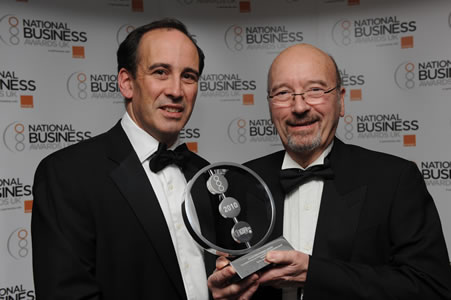
Photo by Co-operative Group

Unless you’re selling something that no one else is, you’ve got competition. They have experience, you have experience. They have selection, you have selection. They have good prices, etc. But how do you tip the scales in your favor?

Show your prospects that everyone else think you’re the best! It’s one thing to say you’re the best, it’s another to prove it. Ideally, this is through word-of-mouth, but the following suggestions are actions your company can take to build your social proof. Remember that the key is relevance – winning an award that no one has heard of (or is in an unrelated field) won’t impress anyone. Instead, figure out how people research companies/products like yours’ and ensure you’ve got the edge over your competition.

Here are the top 3 ways to get the advantage:

Third place: A high search engine position conveys the information that you’re either highly ranked because others think you’re great or that you’ve spent the resources to make yourself well-ranked. In either case, a prominent position conveys the sense that you’re a leader, and therefore should be considered.

Second place: Showcase testimonials from your customers, either directly in your marketing or indirectly on third-party websites (such as: Yelp, Amazon reviews, or Angie’s List).

First place: Win awards that your prospects care about by independent organizations that select the “best of” among your peers – whether that be an Emmy award, Consumer Reports “Best Buy” rating, Diamond Certified, or though independent testing labs.

Since most people aren’t early adopters of new products or services, they need to feel like their choice is well-considered. By showing that others value your offering, you make people feel like they’re making the “safe” or “smart” decision.

Speak With Passion: It Starts With 3 Questions

3 Targets For Speaking Goals

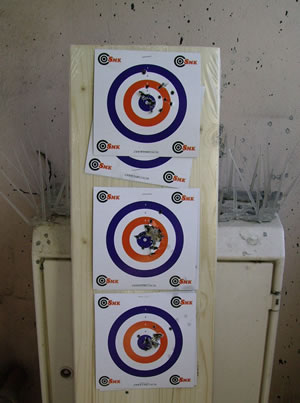
Photo by R e t o

You’ve just been asked to give a speech for an upcoming event. How do you prepare to give the speech for maximum benefit? You start by asking yourself these 3 questions.

What is it you want from your speech? Besides giving a speech that everyone loves, what are your underlying goals for giving the speech? Is it to get booked for other speaking opportunities, sell your latest video or book, get over a fear of public speaking, or impress someone? These goals can be as selfish as you wish. For example, if you’re trying to sell something, you’ll want to refer to it in your talk. Or, if you’re trying to look good for a publicity video, you’ll want to ensure that you’re comfortable talking into microphone.

What is it you want your audience to get from the speech? What specific piece of knowledge are you trying to impart? If you can’t concisely state this goal in a sentence (or two), then you don’t have a coherent message to share. Don’t assume your audience will figure out what you’re trying to share, or fall back and say, “everyone will get something from my speech”. If you can’t concisely articulate your message, how will you be able to tell if you’ve succeeded? By figuring out your clear message, you’ll be able to create both a powerful title and abstract for your speech that sets the stage for your presentation.

What is it you want the organizer to get from the speech? Speakers often forget to incorporate the organizer’s needs into their speech planning. Questions to ask the organizer: Is my speech part of a larger event? From the audience’s perspective, what will come before and after my speech (how can you smoothly transition to what came before to what follows)? What topics will other speakers be covering (you don’t want to repeat, but you may wish to echo their message)? What is the experience you want your attendees to get from the “larger” event? By incorporating the organizer into your goals, you’ll be making the organizer look good, which will later be helpful in getting referrals and future bookings.

When building your speech, refer to these 3 questions often. If you’re not satisfying these three goals, then rewrite you speech to incorporate them. As a speaker, you want to present a clear message, easily repeated, that creates synergy with your audience.

Good Marketing Cents

Marketing Cents (Sense)

Photo by Steven Depolo

A local business made headlines for doing something small – eliminating pennies from their cash register. The store rounds all transactions to the nearest nickel – in their customer’s favor. They computed that the cost of the the lost income was balanced by the lost employee time of counting out pennies as change.

How can this help your own business marketing? Do something unexpected with your business to attract attention (and it doesn’t hurt to mention it to local media after you’ve been doing it for awhile – you never know when they’re having a slow news day). Here are a list of  ideas to inspire your own unexpected business actions:

  • Instead of shipping a package locally, hand-deliver it to your customer yourself.
  • Support 1% For the Planet
  • Give everyone a free cut flower on their birthday
  • Have your customers each month vote for a local non-profit to support
  • Pay for their parking meter
  • If you’re a repair facility – return the product cleaner than when your customer brought it in (shine their jewelry, wash their car, polish their knives, etc.)
  • Hire a concierge to welcome everyone to your store, offer coffee, keep on eye on the meter for them, or even bring water and treats for their dog that’s tied up outside. Even better – hire local homeless people to act as a concierge – it’ll improve their skill set as well.
  • Make your business pet-friendly – encourage your customers to bring their pets into your office.

When marketing your business, instead of only focusing on your unique benefits to people, also consider the human experience of working with you. A great customer experience is often more remarked upon than a simple great business transaction.

Evolutionary Versus Revolutionary Marketing

Evolve Your Business

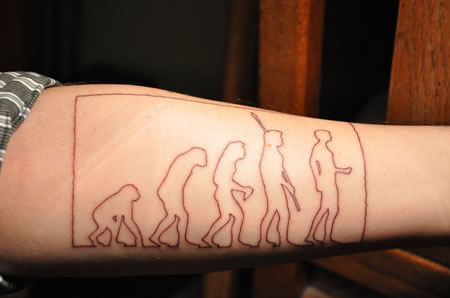
Photo by Craig Finlay

In a recent interview for Life & Style Magazine, Simon Cowell said that “he would have kicked Lady Gaga off the American Idol stage if she’d auditioned for the talent show before becoming a superstar”. Whether or not you’re a fan of Simon Cowell or Lady Gaga is immaterial – what’s important to notice is that a person who’s an expert at spotting talent wouldn’t have spotted her. If you’re looking for marketing advice for your business, be careful who you ask.

If you’re simply trying to evolve your marketing by doing such things as: improved website SEO, an updated logo, new business cards, a better newsletter, etc. – then by all means talk to the experts. They’ve seen lots of businesses like yours, and know which changes to your marketing can result in big results to your bottom line. Their advice will give you a needed reality check and you’ll understand which changes make sense, and why.

However, if you’re doing something revolutionary, then be prepared to hear a lot of people try to dissuade you from taking action. They might mean well, but if you’re doing something truly new/different, then the experts might not be the best judge of your plans. By all means, consult with them to understand where your ideas diverge from the commonly held best practices. Then, test out your different ideas yourself on your target market. Be prepared for a lot of confused people. But be ready for those that “get it” – they understand what vision you’re painting.

Evolution is easy. Revolution is hard and risky. Make sure you understand your goals and then use the right tools to achieve them.

Speak With Passion: Become Super Human

Be a Super Human Business Speaker

Photo by JD Hancock

If you’re giving an instructional talk, you need to position yourself as an guru, someone who knows all and sees all to make your audience trust in you. But positioning yourself in this way will limit your ability to give a speech with passion, something that is remarked upon, remembered, and shared.

When you first start speaking in public, you’ll likely to feel comfortable talking more about what you know (your self) and less about what your audience is interested in (your content). You’ll soon realize that people invested their time and money to listen to your wisdom, and you’ll quickly remove your personal stories from your presentation to get to the “next level” of speaking.

The next level of speaking is all about your information. It’s packed with great tips and techniques that you’ve learned by doing and researching. You’ve got a lot of great set of slides that highlight your points. Perhaps you’ve even taken an extra step of finding stories about people who followed your advice and seen the results of your wisdom for them selves. This type of speech is likely to be fundamentally useful, but not memorable (except for those that came to learn specific academic techniques).

The highest level of speaking is about sharing your information, but in a way that’s memorable. And to do this, you need to go back to your roots. Why is what you’re sharing personally interesting to you? What excites you day-to-day in doing this work? What personal challenges have you faced trying to implement these ideas (both failure and success)?

Ultimately, people aren’t really interested in learning something new. People crave vicarious experiences. They want to see the world through others’ eyes and be excited to feel what they feel. To speak with passion, you need to be vulnerable. Don’t try to be a superhuman speaker (with no flaws). Be a super human speaker (who is believable). Share your passion, and let feeling imbue your presentation.

Add Quick Response (QR) To Your Marketing

Many Good Ideas QR CodeBy now, you’ve probably noticed images like the one on the left – a QR (Quick Response) code. A QR code is simply a two-dimensional barcode that can contain information (text, contact information, or even a website’s URL). To use it, take a picture of the code with your mobile phone’s camera, use a application to scan the image (for some phones, this step is automatic), and read the embedded message.

Generating QR codes is easy and free, using such tools as Kaywa’s QR-Code Generator.

Over the years, marketers have been trying to introduce a variety of technological gimmicks to attract attention. The advantage of a QR code is that it can contain a fair bit of information. The downside is it requires your audience to have access to a mobile phone camera and the motivation to immediately take action when seeing the code. Just like any call to action in your marketing, you need to provide a clear motivation to do so – otherwise your message is lost. In Japan and South Korea, people have been well-trained to use the QR Codes (even being used on grave markers).

Business With Passion QR Code QR codes are encoded with data redundancy, which allows for images to still be scanned if the original image isn’t intact. This feature allows you the ability to customize your QR codes – purposely adding your own logo or branding to a QR code to attract a bit more attention (you need to do this carefully to ensure that your customized QR code still works). Since our human eyes only see a bunch of black and white squares, we quickly skip over the image to get to images we can make sense of. By adding a logo or other additional visual, we provide a visual anchor to attract more interest.

QR codes aren’t be the solution to your marketing strategy – but it’s an interesting tool to consider using in your marketing campaigns. And because the information can be linked to a URL, it means their benefit can be measured and tested.

Transparency vs. Opacity

Is your business transparent?

Photo by Geoff Stearns

Do your market your business transparently or opaquely? A totally transparent business tells their customers where they get their raw materials, how they process them, their internal core values, and a clear statement of how they make money. Alternatively, an opaque business keeps secrets from their customers – their recipe, their innovation process, their markups, etc. How should you market your business?

It all comes down to your marketing story. If you want to charge your prospective customers a premium for working with you (special services, special customization, exclusive offers) – you’re better off marketing opaquely – since you’re trying to set your business off from the competition. You want to show your company has a secret “edge” that they cannot find elsewhere and can’t be duplicated. Such exclusivity is all about perception – making your customers feels special for having chosen to work with you. Examples of companies that market opaquely include: Coca Cola (their secret formula),  supermarkets (where the food comes from is their secret – or you need to trust their labeling), and Apple Inc. (technological and aesthetic innovations are kept highly secret until unveiling).

If instead you wish to showcase your values (how much your company cares about something), market yourself transparently. Show how every step of your product or service offerings is imbued with lots of forethought. Tell why each step matters to your company (and by extension, to your customers). Share your wins and losses to showcase your “humanity” – to show that your company is a natural branding of your clients’ lives. Examples of transparent marketing include: farm tours (meet who grows your food and see them do it),  Zappos (fanatic sharing/support about shoes), and LEED certification (for new construction – details all the steps necessary to build an energy-efficient home).

Opaque business marketing isn’t better than transparent business marketing (and vice versa). But ensure you pick the right type of marketing to appeal to your prospects to have them quickly trust your message.

Fan Your Business

Fan Club Advertisement

Are you tired of trying to grow (or even, maintain) your business with your own team? Have you considered that there are a world of people who might be willing to share your business with the world…for free? Empower your business’ fans to do more than simply like you. Empower them to share your business with their network.

In a traditional business model, the business owner sells their product or services directly to a customer. If someone wanted to buy your offering, they had to buy it from you, your competitor, or do without it entirely.

One way to grow your business is by adding commission-based salespeople outside your company. When they sell your goods, they get a cut of the profit. The upside is that you’re not paying for these additional salespeople. The downside is that you sacrifice some profit for each sale.

You could add an affiliate program to your business. People that help you sell earn something in return. A lot of recent information marketing products have been sold with such a model – someone leverages their email list to make a quick buck. Again, the upside is increased sales. The downside is that (by definition) you’re not in control of the affiliate, and have no way of encouraging them to do more/better without sacrificing more profit.

You could create a franchise model for your business. Share the raw materials, your recipes, your marketing materials, and your trainings with people in exchange for either an upfront and/or ongoing franchise fees. So, instead of continuing to sell your products and services, you’ve created a turnkey system for others’ to do so. The upside is that expansion risk is on others’ shoulders. The downside is that you’ve switched your business model to supporting others to sell your offering.

Instead of (or perhaps in addition to) these models, consider empowering your fan base. The people that already purchased your products and that love them are ideal evangelists for you. Imagine that you give them permission to sell (or in some cases, give away) your products to their network. The motivation that fans have are different. They are likely already sharing your information with others, and you’re simply empowering them to do more. Start with making a formal relationship with your fans (call it a “license”) which details what you want from your fans and what you’ll give them in exchange. A great example of this is the TEDx model. TED licenses their name to individuals and organizations (“fans”) for free. The fans get to use the TEDx name (in a proscribed way) to improve their local community. TED gets the benefits of increased branding recognition for free and they get the content that the TEDx groups produce for free as well. A win-win relationship.

Introducing: Speak With Passion

Speak With Passion For Your Business

Photo by MIXEvent

If you want to be just another public speaker, there are a lot of books, seminars, and classes that you can take. They’ll teach you how to craft your slides, how to dress, how to look at the audience, how to slow down your delivery, how to punch up your points, etc. All are great techniques. But none will teach you how to give a speech that will “wow” the audience, and have your speech be remembered and remarked upon.

The #1 problem with speeches is that they’re designed around the paradigm of a lecture. You have some key points you wish to teach, so you describe the problem, showcase your tips, and then wrap up your presentation with some great take-aways. How likely is this “how to” speech to be remembered a week later?

Inspirational talks are similar to lectures – the point is to impart a feeling into the audience to help them achieve more. So, heartwarming stories are told, and lessons that are embedded in the stories are shared. Weeks later, the stories may be remembered, but the adrenalin rush that accompanied the presentation/workshop dissipated.

So, what’s the secret to crafting a speech with passion? Personal heartfelt stories. A personal heartfelt story differs from a lecture in that you’re not positioning yourself to be more educated than your audience. These are not inspirational talks either – they don’t pull out a specific storyline as a “teachable” moment. Instead, you dig down to show something of deep emotional significance to yourself. Sharing that immediately connects your humanity with your audiences’. Heartfelt emotions aren’t enough – you also need a story – something that can be remembered by the audience. It must contain specific details to help people visualize your story. It must have a clear beginning, middle, and end (for more details read “How To Tell Your Marketing Story“). And it must be true.

To speak with passion means you’re connecting heart-to-heart with your audience, not brain-to-brain. A heartfelt connection is what your audience is craving. Help them get what they deeply desire.