Category Archives: Creative Business Ideas

Is Your Community Behind You?

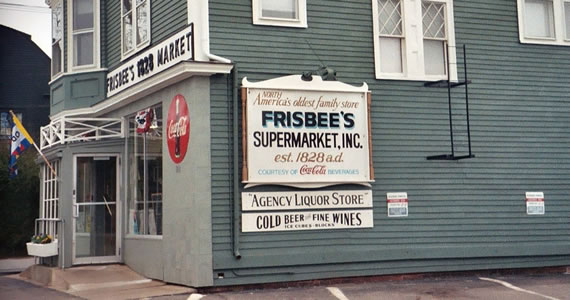
Old Grocery Store
Photo by Nancy Houlihan

The other day I was talking with a local ice cream store owner who was feeling depressed. He was born and raised in the town. His parents still live in the town. He opened a store in the town that appeal to the town’s self-proclaimed values (“organic food / healthy eating”). In the past few months, 3 competitors have opened similar stores in town. The competition are all small chains, none of whom have organic / quality ingredients. And yet there are lines at the other stores, and his store is feeling the pinch. What happened?

First off – his store’s prices are higher than the competition. Better ingredients do cost more. But apparently people don’t always put their money where their mouth is. Especially families/kids who are trying to stretch their budget.

Secondly – While he mentions he’s organic in the storefront, he’s not spreading the message of why organic matters. Is it taste? Health benefits? Eco-benefits? Local farmer benefits? People who “get” his values, already buy from him. People who don’t, see him as another ice cream choice, albeit with better ingredients.

Lastly – Sadly, community-supported stores are a dying breed. Many of us remember the “mom-and-pop” grocery store, the multi-generational sandwich shop, etc. But with market forces increasing, people don’t put the value of “shopping local” into their quality of life equation. If the local store doesn’t show how it feeds the community (supporting local schools, charities, etc.), then there’s no clear benefit to giving your neighbor money vs. a corporation (which may also donate to local schools).

The solution: he needs to first do an independent taste test. Can his ice cream compete on its own taste merits? If so, focus the message on that, then highlight the secondary message: better ingredients, etc. Also, since his ice cream is premium-priced, then he needs to likewise justify the price, or find ways to reduce the price (smaller sizes, frequent buyer discounts, etc.).

The 3 Step Marketing Mockingbird System

MockingbirdPhoto by Linda Tanner

You’ve no doubt heard the call of mockingbirds early in the morning or at night. A series of other sounds strung together to create a unique “calling card”. In creating their songs, they imitate the sounds around them: snippets of other birds’ songs, other animal sounds, humans, and machinery. They’re able to assimilate these disparate songs to create a unique song that serves to attract a mate and establish their territory.

Your marketing system can borrow a lot from the natural wisdom of the mockingbird.

First, listen to business around you. What businesses are flourishing? What catch your attention? What are people most complaining about? What messages seem to have “lasting power” (your business should be anchored in a lasting message, rather than a continual change to the latest business fads). Listen to the sounds of business around you.

Next, craft your own message, borrowing “best practices” from businesses that are succeeding. Repeat the pieces of their message, blending it with yours, to create your own unique marketing message. The message should pleasant and memorable. If it’s too clever, it’s likely to get a chuckle but not be able to be reliably repeated.

Finally, watch the result of your message. How are your prospective customers responding? Do they understand that you’re talking to them? Do they know what you can do for them? Do they know what they need to do to get help from you? Do they know they can trust you?

A marketing mockingbird doesn’t think for a while and create a message that’s written in stone. Evolve the message based on your experiences and reactions. You know you’re on the right path when you’re attracting other mockingbirds.

Scratch The Surface Of Your Marketing

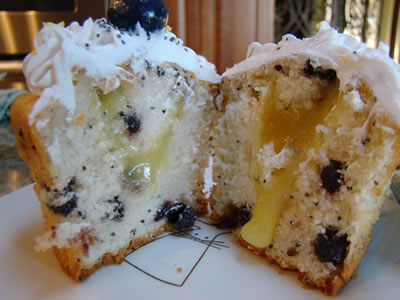
Cross Section
Photo by norwichnuts

When you’re marketing your product, who exactly are you appealing to? What specifically do you think would attract them to what you’re selling? Is it possible to  market your product to the largest audience and simultaneously appeal to different subgroups effectively?

Let’s say you’re a baker selling pastries. What could you say about them?

  • They look delicious.
  • They taste delicious.
  • They cost $2.00 each.
  • They are made fresh each day.
  • They are made with organic ingredients.
  • They are made in small batches to ensure perfect flavoring.
  • They are made by formerly homeless people that you trained.
  • They have 250 calories.
  • They are made with fruit from your organic garden, harvested just before baking.
  • They are baked with solar-powered ovens.
  • They are made in a peanut-free environment.
  • They are vegan.
  • They can be delivered to your door within 2 hours of baking.
  • They can be customized with your favorite fillings.
  • They have a low glycemic index.

What’s the most important of these points to your audience? No doubt taste & looks are #1. But everyone says their pastries look and taste fantastic. So now what?

If you’re marketing to vegan restaurants, the fact they’re vegan is #1. If you’re marketing to socially-conscious people, who makes them is very important.

To appeal to a wider audience, have a different marketing message for each of the senses. Each of these senses combine into a larger message, but the individual message stand perfectly well on their own:

  • Sight: Instead of showing a photo of a lone pastry, show someone smiling and eating it (or licking it).
  • Smell: Describe how the smell of a fresh pastry can transport you to another time or place (a Parisian cafe or your grandma’s kitchen).
  • Taste: Your mouth will dance and your diet won’t be compromised.
  • Touch: Feel how the pastry springs back in your hands – it’s a sign of just-made freshness.
  • Hearing: The only sound you’ll hear will be silence, from the concentrated pleasure of small-batch perfection.
  • (Bonus) Mind: Feel good knowing that each bite of the pastry is full of organic freshness and made by people who were formerly homeless in solar ovens.

Finally, if you don’t know why people buy them, ask them. You might be surprised by the answer.

How To Boost Your Donations

Please Donate To Help Me
Photo by Alan Turkus

As a non-profit, you’re constantly looking for opportunities to increase both your donor base and the average donation. In Dan Ariely‘s book The Upside Of Irrationality, he details the three triggers necessary to boost donations: closeness, vividness, and “drop-in-the-bucket” effect.

Closeness refers to how similar your feel to someone. You naturally share a feeling of closeness with people that share your background or zip code. Someone halfway around the world living in vastly different conditions doesn’t encourage my normal empathy.

Vividness refers to how much detail you provide on a problem your organization is solving. If you’re telling people about statistics (“every day, 10 people get infected …” ) or  general conditions (“throughout the village, people are drinking polluted water …”) you’re not engaging their emotions fully. Instead of giving me the big picture of the whole problem, give me the scope of how the problem affects a specific person (“7-year old Jamilia has trouble waking every day. Her mom cries herself to sleep each night watching her only daughter slowly waste away from the parasitic infection that changed her from a bouncy girl into a …”). The better you can paint how one person is affected, the better your potential donor can feel how the problem feels.

Drop-in-the-bucket asks the question, “Will this action really matter?”. What will it matter to heal one person when 1,000 other people in their city are dying each day? People want to donate to a cause that can fix the root cause of the problem. They don’t want to fix the problem one-person-at-a-time.

In your next non-profit marketing effort, develop these 3 marketing strategy points to help your (potential) donors empathize with your fine work and share their generosity with your organization.

What Is Your Ideal Business Day?

My Ideal Day
Photo by skyseeker

Have you ever imagined exactly how your ideal business day would unfold? If you’re like most people, you spend your business day reacting to phone calls, emails, and customers. By planning for your ideal day, you’ll start the process of making the day happen (and not just once).

Start with the basics: When do you wake up? Where? What’s the weather like? What do you eat? Where do you eat? Who will you eat with? What will you wear?

Next, the business: When does your workday start? How does it start? Do you contact others or do others contact you? Are people calling you because they read an amazing review of your product in that day’s New York Times? Is there a line outside your business waiting for your new product that’s this season’s gotta-have? Perhaps a movie executive wants to hire you to lend your skills for an upcoming big-budget movie starring your favorite actors. Or maybe you get a personal letter from a child, thanking you for making their home such much nicer.

What about the money? Exactly how much money do you really need? For what purpose? Does it come in daily, monthly, or in sporadic royalty checks? Is it hand delivered or direct-deposited?

What about the customers? Who is your ideal customer? Where are they located? What do they look like? What do they say to you? Are you looking to have your customers as friends or simply anonymous consumers? Are they raving about you or keeping you as a special secret weapon?

By focusing on an ideal, you’ll naturally work towards the pleasurable goal (whether intentionally or not). The trick for making it happen is regularly visualize how wonderful the day makes you feel.  Of course, this same technique can be applied to the rest of your life as well. If you don’t dream, you’ll have no one to blame but yourself.

Your Marketing Punchline

Telling A Joke
Photo by Nick J Webb

What makes a joke funny? The punchline. The punchline pulls together the story you’ve been told, and then twists it in an unexpected way. The unexpected shift bypasses what you think will happen and instead delights you with something unseen. When marketing your business, you don’t have to be funny, but you might want to strive to say something unexpected.

I call this zigging when everyone else is zagging. For example, if you’re a masseuse, your “zag” marketing message is probably one of the following:

  • You deserve to treat yourself better today
  • De-stress your body
  • Put your body in optimal health

These are all fine messages, appealing to our emotional/physical health. But instead, how would you react to any of these zig messages:

  • After you reduce your pain, what are you going to complain about?
  • My last client loved my massage so much, they married me.
  • I’ll relax your muscles while you relax your mind.

The point to each of these messages is that the setup is the same (pain/relaxation), but the result of the offering is unexpected (complains, marriage, or peace-of-mind).

Don’t zig just to zig. Zig when zagging is the norm and your zig is something that’ll be noticeable and significant. In the three zig examples, we’re still mentioning the key benefit, but we’re making the result of achieving that benefit something memorable. We want to create a mental “double-take”. The extra attention will get you noticed and have a better chance of being recall-able when your prospect is ready for your offering.

Go Beyond Your Comfort Zone

Bungee Jumping

Photo by Esparta Palma

Most of us are wired to avoid physical risk (especially as we get older). We are told to be careful with our money and business, to ensure long-term success. What what types of risks should we be regularly taking with our lives to ensure growth and satisfaction?

I’m not talking about taking risk for the sake of taking risks. There’s no reason to suddenly decide to sell silk scarves from Borneo made from the silk of a jumping spider or spend half of last years’ income on a new advertising campaign. However, both may be the right choice after you’ve done your homework.

I am talking about doing something that won’t kill or bankrupt you but makes you uncomfortable:

  • Make business house-calls. Visit your clients in their place of business. Watch what they do to learn more not just about them, but about how you can better anticipate their needs.
  • Make public speeches.
  • Throw away your PowerPoint slides. If you’ve been making speeches for awhile, you probably have a PowerPoint deck that’s more a crutch than a benefit. Imagine that you’re about to give a speech, and your slides won’t work. Give the speech that’s fires up the listener’s imagination and forces them to pay attention to you, not your slides.
  • Make friends with your competition. Business doesn’t have to be a zero-sum game (if they win, you lose). Consider ways to create win-win opportunities, especially if you’re both having to educate your customers about the benefits of less well-known product or service.
  • Act dumb. Don’t assume you know the answers to all the questions. Ask others how they would solve certain problems. Be willing to do reverse-mentoring (asking for help from those subordinate from you) to see how fresh eyes / different backgrounds can open up your eyes.
  • Get lost. Take a new driving route. Go to conferences that are well-attended but don’t relate to your business. Advertise your business in alternative media.

Well-considered risk will keep you sharp and aware of future trends. Comfort is nice, but long-term success comes to those that embrace change.

Beat The Marketing Clock

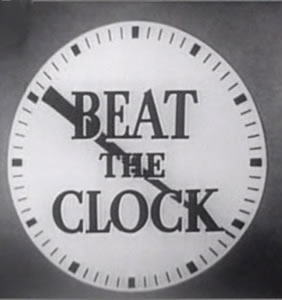
Beat The Clock

Does it feel like your business marketing efforts is a constant race to beat the clock? Are you overwhelmed by the seemingly never-ending
deadlines looming? Is there any hope for making your marketing effortless (or at least, manageable)?

The first step in getting off the marketing treadmill is tracking exactly how much time, energy, and money you’re spending on your various activities.

Next, for each of your activities, how are you specifically measuring the fruits of your efforts? “Fruits” can mean: more phone calls, more bookings, more appearance, more sales, more web traffic, more subscriptions to your newsletter, or more mentions in media. Calculate the ROI (return on investment) for your activities. If you enjoy going to a Chamber mixer, but you seldom get any fruits for your effort, factor in the “enjoyment factor” as a fruit.

Finally, realize that almost no one does well with the pressure of a ticking clock looming. If you’re a creative person, make sure that you have ample down time to let your creative thoughts “steep”. Focus on tasks that provide a multitude of benefits to your business. For example, if you regularly write a newsletter, repurpose the newsletter’s content as a: website blog posting, an article bank letter submission, or an audio or video podcast.

By aligning your tasks with your skills and ROI for past efforts, you’ll stop watching the clock and start enjoying your business more. Remember why you started your business in the first place – to share your skills with the world. By focusing on the ticking clock, you’ve denied yourself of critical energy you’ll need to take your business to the next level.

Be A Marketing Stand Out

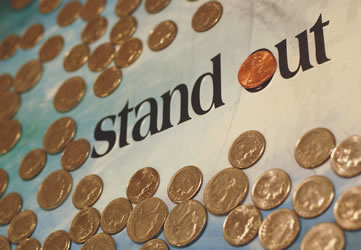
Flotsam on Beach
Photo by Cameron Cassan

When you’re just like everyone else, no one notices you. To make your business stand out, you need to be different…for the right reasons.

Being different for the sake of being different is likely to get you noticed, but create the wrong impression. You’ll create a marketing “double-take”, but what will be remembered is “that’s unusual” not “that’s unusual and incredibly important to me”. In fact, this is the problem with shock marketing – upping the “wow” factor, but not upping the relevance factor.

Being different takes guts. It’s safe to place yourself in the mainstream message (it’s the right thing to say, since all my competition is saying the same thing). Being different isn’t financially prudent. Being different is risky.

Being different takes leadership. You need to clearly articulate why being different is the right thing for your business and your customers. People want to feel special. If your business is likewise “special”, there’s a great opportunity for alignment.

Being different can fail spectacularly. Compare a slow slide down to obscurity as opposed to going out in a blaze of glory. You don’t want your marketing to kill your business, but look at the writing on the wall. If you don’t innovate, you’re likely to keep losing market share from those that do.

Being different is painful. You’re likely to suffer some ridicule from the pundits for saying something that no one else is saying. But if your message resonates with your audience, it doesn’t matter what the “experts” say. It matters what your customers do.

Businesses that are first-to-market or first-to-niche have a much higher probability of success than those that come later. Create a new opportunity for your business by sticking out in a way that truly matters.

Marin County Election: Marketing Political Signs

Running for office involves a lot more than simply creating signs with attractive graphics. However, these seemingly ubiquitous signs do create impressions. Now that the recent election is over, let’s examine the effectiveness of various local politicians’ signage in this totally non-scientific analysis.

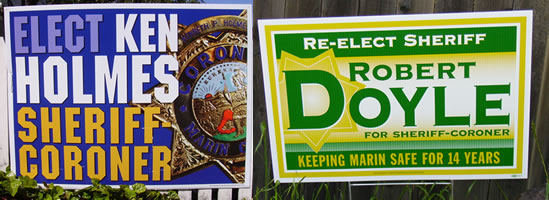
Marin Sheriff-Coroner Campaign Signs

The first set of signs is for a new political office: Sheriff-Coroner. Who would you vote for (and why)? If you’re satisfied with the status quo, you’d likely vote for Robert Doyle, who mentions the key benefits “Keeping Marin Safe For 14 Years” and reinforces his insider-ness (“Re-Elect Sheriff”). If you wanted the image of bold/confident, then Ken Holmes’ sign (with the blue background and prominent shield) would suit you. Election winner: Robert Doyle.

Marin Sheriff-Coroner Campaign Signs

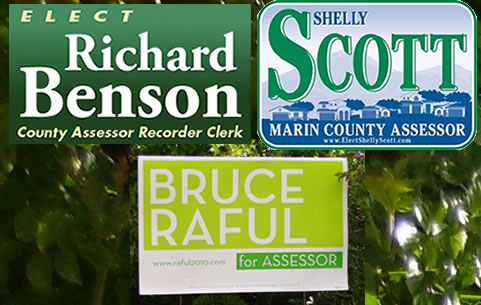
Based solely on these signs, who would you elect for Assessor (and why)? The strongest graphics are for Bruce Raful. Shelly Scott’s background imagery reflects a stylized version of the community. Richard Benson’s is generic. None of the signs show any compelling taglines nor benefits to electing them. Election winner: Shelly Scott.

Marin Sheriff-Coroner Campaign Signs

Based solely on these signs, who would you elect for Supervisor (and why)? Susan Adams’ sign is similar to Robert Doyle’s (above): a re-elect message and an endorsement by a well-known organization. Kerry Mazzoni’s stylized imagery shows the physical location of the civic enter, but doesn’t provide any message for why to elect her. Election winner: Susan Adams.

Marin Sheriff-Coroner Campaign Signs

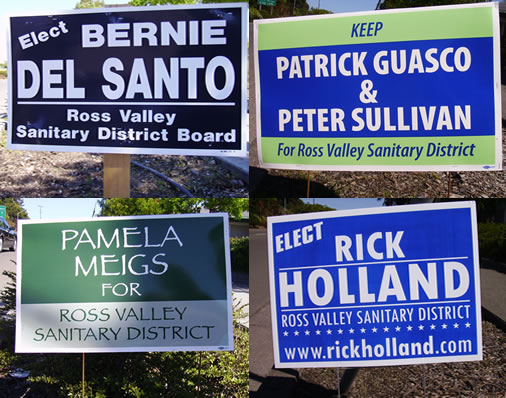
Finally, looking solely at these signs in this vote-for-three election for the Ross Valley Sanitary District who would you elect (and why)? Patrick Guasco & Peter Sullivan use the word “Keep” to imply incumbency. Bernie Del Santo and Rick Holland’s signs are pretty much interchangeable. Rick Holland makes his website’s URL prominent – for what purpose? People won’t look up a URL unless they have a compelling reason to do so, which his sign didn’t provide. Pamela Meigs sign stands out not because her message (which is equivalent to Bernie Del Santo and Rick Holland’s) but because of the font choice she made. It’s a lighter weight font that’s modern and non-corporate looking. Winner: Patrick Guasco, Peter Sullivan, and Pamela Meigs.