Archive for April, 2011

We will combine the elegance of a spa with the therapeutic effectiveness of an injury clinic making our business the perfect option for those that live healthy and stay active.

Many of our treatments will have fun names (‘the weekend warrior’) though we still want to convey an image that treatments are beneficial and only a few are simply for relaxation.

The clinic will be located in the heart of the city of approximately 800,000 -we will have a storefront in located in a high traffic area.

We estimate our largest target market will comprise 60% women, between the age of 20-50.

When all said and done we would like our name/image to be recognized as having an innovated spa/clinic concept. Were not going to have a meditative theme like many spas or the feel of many doctors offices. We want to attract those that live healthy and stay active.

###

Jay’s Answer:

  • Mobility: A Massage Clinic
  • Pain Vacation: Therapeutic Massage Clinic
  • Rejuv: Therapeutic Massage Spa

My wife has been a Real Estate broker for some time and now I am joining her in the business. We are trying to come up with a theme/brand and tag line/slogan for us.

What we are about…I guess just like every other broker/agent out there but the difference with us is… we are not about just helping people buy & sell homes but we are about assisting every client with every aspect in Real Estate. We want to educate our clients so that they may make the decision that is best for them. The difference is…the real estate does not end at the closing table, which is when most agents are done…but we are just getting started. We are always here for our clients…we are their Personal Real Estate Consultants. So, how can we get that into a tag line/slogan?

About us…our market is in the Truckee Lake Tahoe area and our two niches are…
Resort home buyers and The empty nesters that are looking to downsize a bit.

Our last name is Harry. Thank you for your time and assistance!

###

Jay’s Answer:

Sun & Ski Tahoe Realty:
Specializing in Lakeside Resort Properties

Sun & Ski Tahoe Realty:
Live Simpler. Live Better. Live Here.

We are creating a corporate training program around financial acumen and need a catchy name. It is geared towards employees at all levels within our corporate office and will provide them with the basics of understanding our financial statements – balance sheets, income statements, etc. Employees will also learn how they can affect our financial metrics, which can impact their annual bonus payouts.

###

Jay’s Answer:

  • The Better Bottom Line
  • Making Financial $en$e

I need help with a tagline for our new business. We are combining two businesses into one: One selling children’s shoes and classic items, the other selling educational materials and curriculum for families and teachers. The store is called Classic Kids. We need a tagline and had thought of “Helping kids grow from head to toe”- but we aren’t really “helping” them and it seems wrong. But, how do we capture the two unique angles of our store in a tagline?

###

Jay’s Answer: If you would’ve asked me what I thought about combining these two businesses under one roof, I’d strongly advise against doing it. The problem you’d face is that you’re trying to sell different things to different audiences. That means that your message is either too generic (to encompass the range) or too limited (missing on the other half of your business). Teachers aren’t interested in buying educational information from a shoe store, etc. People in general don’t go looking for things in a variety store – it’s fun to look, but hard to find what you need unless you have some expert helpers. People do go looking in stores that specialize in a product or service.

No doubt you had a good reason to want to combine the two businesses, so the best I can suggest is using “Classic Kids” as an umbrella name, and creating two brands underneath it. For example: Little Feet (a division of Classic Kids) and Classically Smart (a division of Classic Kids).

A tagline that hopes to span these diverse needs will no doubt feel like an artificial stretch, and therefore won’t help to clarify what exactly you’re selling to whom.

Ingredients

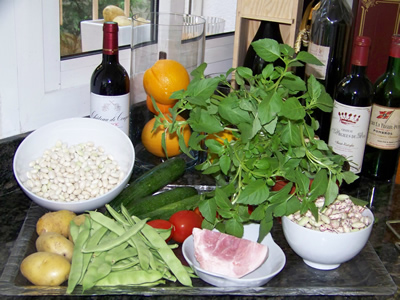
Photo by Cuisine de mère en fille, et des autres

If you’re selling a mouth-watering delicacy or high-tech software, you might be tempted to highlight some special ingredient that only your product has. You may even go so far to explain how rare, how expensive, or how confidential the ingredient is. Even though the special ingredient is your pride and joy, your prospective customer really doesn’t care a whit.

Your customer isn’t looking for a special ingredient, they’re looking for a solution to their needs. Unless your special ingredient is that magical answer, the specialness is simply an “edge”. Your “edge” may be perceived as a negative by the risk-adverse (what’s the downside to your special ingredient?). Most businesses fall into the trap of highlighting their features, before they’ve ascertained if their customers care about them.

So, if you’ve got a special ingredient, don’t lead with it in your marketing. Use the ingredient to propel your solution to the front of your customer’s mind. For example, “Because we use Persinofex 10 in our cleaning solution, you’ll be able to clean your windows in half the time and they’ll stay clean twice as long”. The benefit isn’t the “Persinofex 10″ (whatever that is) – it’s saving time with chores. (For other major benefits, see my previous article Marketing 101).

Keep striving to develop unique ingredients to your offerings, but make sure that you always anchor your uniqueness with something your prospective customers are willing to pay (extra) for. Otherwise, your secret will stay a secret forever.

Married Choice

Photo by skidrd

If you’re selling your creative services, one of the most frustrating (and dangerous) phrases your client can tell you is, “I’ll know when it’s right.” That means your mission isn’t simply to creating something amazing, it’s also to read the mind of your client and discern what they think they’re asking for. The end result is a lot of aggravation by everyone – no one quickly got what they needed.

The better way to is to create a tightly written creative brief. The brief describes the client’s problem, needs, resources, assumptions, and measurable goals. Most people don’t write a brief thinking it’ll take too long (or they don’t have the budget for it). Writing a brief is hard work, and does require solid proactive thinking. It may also require a different set of skills than either you or your client have – a marketing strategist. A strategist can tease out the various needs (both short-term and long-term) and get team agreement.

The creative brief allows everyone to judge choices and outcomes using a objective yardstick. Instead of trying to please someone’s inner judge, it becomes much simpler to see what’s the best option. Often, the best solution isn’t immediately obvious (or loved). It may be too radical, too simple, too expensive, too risky. A person who’s risk-averse might not naturally accept the solution, even if it matches all the specifications/needs described in the brief. The thing that most clients pay attention to is “how does it make me feel?” The right thing they should pay attention to is, “how does it make my clients feel?” They’re the ultimate judge of what works (and why).