I recently listened to an interview by Larry Smith and Rachel Fershleiser (who compiled Not Quite What I Was Planning: Six-Word Memoirs by Writers Famous and Obscure) on National Public Radio. The basis of their compilations was the legend that when asked to write a six-word novel, novelist Ernest Hemingway responded: “For Sale: baby shoes, never worn.”
That got me to thinking about taglines, those seven-or-so words that we use to encapsulate a key benefit of our business. Or headlines, short pithy words that get people to keep reading. And I realized that a six-word novel might even be more juicy material to build your marketing.
A tagline (or slogan) tries to be self-contained. Easily understood. Unambiguous. Maybe clever or memorable. But the end result is often dull. Yes, it’s clear but it’s not helping to inspire dialog between you and your prospective customers.
Perhaps it’s time to create your own business’ six-word memoir to pique some targeted interest in your message.
For example, instead of an insurer with a tagline:
Protecting Your Family And Your Future
(which has a clear emotional hook/benefit), imagine any of the following business memoirs:
Unplanned Future. I forgot. Our loss.
Should’ve saved. Could’ve relaxed. Too late.
Boring insurance. Sudden catastrophe. Lucky me.
These memoirs serve a slightly different purpose than a tagline. They don’t tell your whole business. They paint a quick emotional story, which could easily be filled in by supporting copy.
I am often asked what tricks people can use to get their video or product announcement to go “viral” (spread online quickly). In almost all cases, people are trying to make an entertaining message get passed around like a funny joke. If the message does get passed around, all too often the business part of the message is forgotten. People get traffic to their website, but no one is paying attention to the business – only the entertainment. It’s a lost opportunity.
The late Dr. Everett Rogers described in his book Diffusion of Innovations (first published in 1962!) the five key ways innovations spread (or in modern lingo, go viral):
What benefit do the consumers notice: price, prestige, appearance, convenience, and/or satisfaction? The clearer the emotional benefit, the faster the innovation spreads.
How easy is it to use your innovation (from what your consumers are already using)? Habits are hard to break. Bigger changes require bigger benefits. Smaller changes only require smaller benefits.
How steep is the learning curve? The more education, the lower the likelihood for spreading the word.
How easy is it to sample? A free experience reduces the fear of a bad choice.
How easy is it to see the results? The more obvious the benefit, the higher the likelihood for spreading the word.
None of these are magical incantations to get your idea/product/service to spread like wildfire. However, if you do incorporate Dr. Roger’s messages into your next viral marketing campaign, you dramatically increase both the speed of the message and the retention of it.
Recently I was reading The Five Love Languages book and realized that the principles that apply to communicating love between people also apply to conveying the emotion of love in your marketing.
According to author Dr. Gary Chapman, there are 5 different ways that we each can feel love, and that each person has a preferred way to get the “love message”:
Words of affirmation (compliments)
Quality time (with you)
Receiving gifts
Acts of service (doing something for you)
Physical touch
If your marketing emotional message involves helping people to feel more loved, then it’s important that your marketing materials speak all five languages to convey love so that your prospects can understand your message deeply.
For example, use phrases like “imagine looking better” (affirmation), “something that shows your love” (gift), “show you care” (acts of service), “spend more doing what you love” (quality time), and “feel your love in your body” (touch). Certain of the languages are easily shown visually, and would complement your marketing copy as well.
If your product or service doesn’t connect with the love emotion, don’t try to force the connection. But if the basic need that people are hoping to fulfill can be (partially) achieve by your offering is love, make sure that you’re speaking your prospective customer’s language.
The next time your organization wants to get some free media attention, consider breaking a record in Guinness Book of Records with the benefit to a local charity.
Everyone (including the media) is always interested in the biggest and the best, the most, the tallest, the highest, the largest and the greatest.
Everyone is always interested in the average person doing something curious or odd so long as it’s entertaining.
Finally if you also raise money for a local charity, then you have created the “perfect media storm” – something altruistic and something bizarre and wonderful all in one event.
For example, imagine 10,000 people jumping rope to fight colon cancer.
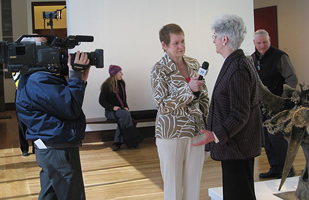
I’ve been interviewing a number of guests for my new TV series (“Business With Passion“) and have developed a number of successful techniques to make the guest feel comfortable and have a great interview. The same techniques that work for interviews are great for any business or social meeting as well.
1) Sit (or lean) slightly forward. Your body language conveys your level of interest.
2) Look your guest in the eye. You may be thinking about the next question you want to ask, or daydreaming about something unrelated. Remember that you are your guest’s audience. Be a receptive one.
3) Smile. Encourage your subject by nodding and genuinely enjoying the time you’re spending with your guest.
4) Help them. Remember that your guest is doing an interview for their reasons, and you’re holding an interview for your own. Make the interview a win-win experience. Find out what information they want to convey, and guide them to share the information in your own style.
5) Talk about them. Most people like to talk about themselves. Ask questions whose answers you care about, and show that you’re listening by asking appropriate follow-up questions.
6) Take notes. This might seem to be a distraction, since you need to look away to write something down. However, when your guest realizes that you’re not wanting to miss a gem they imparted, they’ll be flattered.
7) Isolate them. By talking with someone in an environment with few distractions, your guest will be able to focus more on your interview and not get sidetracked.
8) Start out slowly. Ask questions that require little thought (their name, how to spell it) and move into things that are near and dear to your guest.
9) Make the goals clear. Especially for broadcast, people are a bit wary of talking “on the record”. They want to make sure they are not misquoted or taken out of context. Ideally, show them examples of your previous work. Tell them how your interview will use be used (and your goals for it).
10) Leave ample time. Make sure your guest has time to ramp up, goof up, rethink, and reflect. You want your guest to feel confident that what they say matters and their time with you is important.
The next time you spend money on an advertisement, spend extra time proofreading and spell-checking it. There’s nothing more unprofessional than misspelling “professional”. Also, if you’re going to mention an other company’s trademarked name, make sure you capitalize it correctly and provide proper trademark attribution.
When you meet someone professionally and they ask “What Do You Do?”, how do you respond? Do you have your pitch ready?
15SecondPitch offers a free service (“PitchWizard“) that asks you a series of questions and within 5 minutes, you have created a first stab at a pitch:
Your contact information
I am a(n)..
Specializing in..
What you do (specifically)
Why you’re the best at what you do (uniqueness)
Your call to action (why do I need to contact you today)
Notice that thesequestions are basic marketing strategy: who are you targeting, what problem do they have, how you solve it, what makes your offering unique, and why should you be trusted.
When I try to define what marketing is, I find myself thinking about this song from Thomas “Fats” Waller’s Ain’t Misbehavin‘ Musical. While the song is about how to attract a man, the meaning behind the song can apply to your small business marketing. The chorus (“Find out what they like and how they like it and let ’em have it just that way”) is focused on the message of how to appeal to your target audience. The message is simple: find the need an fill it.
However, before you jump in and start trying to uncover out what they like, first focus on who “they” are. Who specifically is your target audience? Male or female? Age? Living where? Married or single? The narrower your focus, the easier it will be to target them.
What do they like? Start by realizing that they probably don’t need what you’re selling. Your goal is to have them want what you’re selling. Targeting a want is best done with an emotional “hook”. Make your offering connect to one (or more) core human desires(s) (such a love, fame, health, etc.) and you have a good start.
If you are trying to convince your target audience that they have been doing things all wrong and that you have a new way to achieve their goals, you will have a tough going. People want what they want. They don’t want to be educated. Ideally, give them what they want and transition them to something better. Giving them what they want does not mean to do what everyone else is doing. Your offering needs to be unique. But it should be familiar.
Find Out What They Like
And How They Like It
I used to wonder right along why I couldn’t hold a man.
Every love affair went wrong until I changed my plan.
We’re having no more trouble now.
My daddy’s nice as he can be.
Ladies I will tell you how, that’s if you’ll take a tip from me.
Find out what they like, and how they like it,
and let ’em have it just that way.
Give ’em what they want and when they want it,
without a single word to say.
You’ve got to cater to a man and if you don’t
he’ll find some other gal to do the things you won’t.
Find out what they like, and how they like it,
and let ’em have it just that way.
Find out what they like, and how they like it,
and let ’em have it just that way.
Give ’em what they want and when they want it,
without a single word to say.
Just add more sugar if he says your jam ain’t sweet
or he will sneak for his dessert across the street.
Find out what they like, and how they like it,
and let ’em have it just that way.
Find out what they like, and how they like it,
and let ’em have it just that way.
Give ’em what they want and when they want it,
without a single word to say.
Now you will lose him if you give him lollipops
when you know he’s crazy just to have some chops.
Find out what they like, and how they like it,
and let ’em have it just that way.
Find out what they like, and how they like it,
and let ’em have it just that way.
Give ’em what they want and when they want it,
without a single word to say.
Now if he claims his lodge is meeting every night,
it means you do not handle all your business right.
Find out what they like, and how they like it,
and let ’em have it just that way.
And let ’em have it just that way.
And let ’em have it just that way.
I learned some lessons about putting out a call for sources for my new Business With Passion TV series.
Have someone review your request. You know who you’re looking for, but it’s easy to not be 100% clear in your request. Have others read you request and note all ambiguities.
Create a special email address. Instead of using your normal email address, create a special address just for this purpose. It’ll make sorting your normal emails simpler.
Respond to every pitch. Having pitched my own business a number of times only to hear…nothing, I was determined that everyone that took the time to pitch me at least received a polite email response.
Use an autoresponder. Had I used a special email address (see above), I could have set it up so that emails to that address received an automated reply confirming their pitch. That would’ve saved me a bunch of time responding to every pitch.
Categorize the pitches. I used my email program to organize the pitches into five categories: Yes, Probably, Maybe, Probably Not, and Definitely Not. If you’re unsure about a pitch’s category, bump it up to the higher category. You can always downgrade the pitch, but you’ll be focusing on the pitches in top-down order.
Prepare an overview. Although you have an image of how you’ll use your sources, your potential sources don’t.Create a single page overview of your project with specific dates/needs. It’ll ensure that everyone is working together.
Pre-screen. Some people look great on paper (e-mail), and some look great in-person. Make sure that your sources match your needs. If you’re going to be doing an audio or video interview, pre-screen the potential guests (by phone). Although there are no guarantees, you will have a better idea of how they will be.
I recently put out a call for sources for my new Business With Passion TV series on “If I Can Help a Reporter Out…“. Because I received a wide range of responses, I thought I’d share some advice for how to pitch yourself (or your client) well:
Read the request. Although my subject was “Passionate Guests for Local Biz TV Show (TV – San Rafael, CA)”, a couple of people thought I was looking for guests for a radio interview.
Don’t underwhelm me. A number of people wrote saying, “I’d be a great guest – check out my website to see more”. I don’t mind digging for information, but only after it’s clear it’s worth my time.
Don’t overwhelm me. One person sent me 20MB worth of high-resolution head shots of their client. Besides taking a while to download, it wasn’t helpful to evaluate their pitch.
Tell me why you’d be great. Ideally, you’ve been on other media (and have clips to share). If not, tell me a story to get my interest piqued. This is tricky, because you need to balance personal information with professional accomplishments. As a producer, I am looking for an interesting person with a story. As a reporter, I am looking for solid credentials.
Don’t sell me your services. Some people sent me their advertisements, complete with price sheets. I’m looking for a guest, not a salesperson.
Don’t pitch me your story idea. A couple of people had their own agendas to push. I might be interested in listening to them after we’ve explored my needs first.
Proofread your pitch. Especially double-check your contact information (including your website’s URL). Spell checking is available in most email programs as well.
Don’t tell me that someone is “perfect”. Unless you know everything about the show, the target audience, the format, etc. you can’t know if there’s a fit. Also please don’t say, “I guarantee your time will not be wasted.”
Look professional. About half of my responses were from public relations firms who were representing their clients. The read the request and pitched a single client of theirs (usually) in a single paragraph/bio. They provided links to their client’s media pages and any current/relevant information. As a result, it made for easy work.