
Category Archives: Creative Business Ideas

…And The Last Thing You Say In Marketing

Goodbye
Photo by RatRanch

People seldom remember the details of a marketing message the first time they see it. They read your message (see: The First Thing You Say In Marketing…) because something about it appealed to them. How you end the communication determines how they “walk away” from your marketing.

On your website, when someone signs up for your newsletter or completes an order, how do you acknowledge their action? Your website gets many visitors, but few actually communicate with you. How do you thank them for their time and action? If you have a landing page, do you summarize your offer? Do you have a P.S. postscript (many people who scan long web pages simply read headlines, look at graphics, and postscripts).

After you meet someone, do you request their business card or contact information? Do you quickly move along to someone else or do you genuinely thank them for their time? If you promise to follow-up with them, do you?

In your emails, what’s in your signature line? Do you sufficient contact information? You want your email recipients to easily contact you.

In your correspondence, does your last sentence summarize the points in the letter and provide a clear call to action?

In your advertising, is your contact information clearly displayed, the offer concisely described, and the “after-image” of your advertising memorable and tied-in to your company? You want viewers to be able to quickly associate your image and company.

When you answer the phone, do record the gist of important conversations and have a system for following up with callers?

When you leave a message, do you repeat your name, company name, and phone number at the end of the message clearly?

When you give a presentation, do you summarize your main talking points, and give the audience a clear “take-away” to remember your talk by?
The First Thing You Say In Marketing…

Hello Name TagPeople make snap judgments in all their interactions. According to Malcolm Gladwell’s Blink, you have two seconds before someone jumps to a conclusion. You have two seconds to state your initial marketing message.
On your website, you have two seconds to convey who your web page is targeting. Make it obvious through the use of headlines, layout, menu names, and graphics your exact message.

When you meet someone, how you dress, where you look, your facial expressions, your tone of voice, and the words you use all quickly tell people about you. Make yourself easy to approach and give each person your full attention.

In your emails, make your subject line both interesting and accurate. Most people look through their email in-boxes first by seeing who sent the mail, and then the subject of the email. If it doesn’t pass their internal filter, the email is often deleted even before it’s read. You don’t want emails from you to be equated to spam.

In your correspondence, make your opening sentence on-target. If your letter doesn’t give me a reason to continue reading, then I’ll quickly toss it, and read my next letter.

In your advertising, the image and headline you choose will either attract or repel the reader’s eye. The image should reflect your copy, headline, and branding. An image that doesn’t jibe with the copy quickly becomes eye candy, and reduces the believability of your message.

When you answer the phone, do people feel welcomed? Do you speak slowly enough to make sure the caller knows if they dialed correctly? Do you clearly say the name of your business?

When you leave a message, do you say your name, company name, and phone number at the start of the message clearly? Do you leave a concise message, containing all the relevant details to avoid telephone-tag?

How Aikido Can Save Your Business Marketing

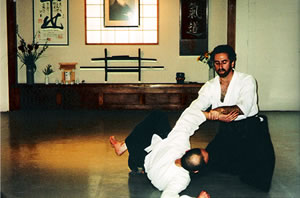
Aikido & Creative Marketing StrategyAikido is a Japanese martial art based on “blending with your opponents’ energy”. As I learned during my 12+ years of training on the mat, victory over others is a matter of physical and mental training. In business, you need to win over your customer prospects and stand out from your competition.


  1. Ground Yourself/Center. Masters are confident and aware of their own expertise. They also know what they don’t know, creating partnerships and learning opportunities to improve their limitations.
  2. Relax. Focus on your goal, but don’t try to be able to do everything well. Do your homework, then let your knowledge pick your best choices through grounded intuition. Know how you use the tools at your disposal, and use them optimally.
  3. Awareness. Know your competition. Don’t be afraid of them. Pay attention to what they are doing and their intentions. Know your own relationship to your business environment.
  4. Extend. Reach out to your customer, but don’t lose your own business “center”. Keep your core values intact, and you’ll be able to authentically offer your services.
  5. Don’t Resist. See what your customer is asking of you, and adjust to their needs. If what you’re doing isn’t working, stop struggling and be willing to experiment with something else.
  6. Pay Attention. Great marketing is about leading, not reacting. Don’t try to play “catch up”, seize new opportunities and anticipate needs.
  7. Connect To Something Larger. See the big picture of what your customers need and how your offering fits into that image. From your customer’s perspective, it’s not all about you, it’s about their needs.
  8. Lose To Win. A great strategist knows when to give (“lose”) to get (“win”). By focusing on a business strategy that builds on your skills, you can adjust your short-term actions to achieve your long-term goals.

Martial arts and marketing mastery both require continually improving and practicing. You must constantly be willing to seek out new information, try it out, and see what works (and why it works). Just because someone offers a technique that works for them doesn’t mean it’s appropriate for you or your business. If you don’t make mistakes, you won’t learn. Seek out senseis (teachers) to get feedback on your practice.


The Art Of LearningIf you’re interested in learning more about martial arts strategy, I recommend “The Art of Learning“. It’s a fascinating introspection of the training necessary to produce martial arts “miracles”, written by a former chess master who became a world champion at Push Hands.

10 Rules For Great Taglines

TaglinesA tagline or a slogan is a phrase (for example, “Just Do Itâ„¢”) intended to get “stuck” in prospects’ heads. The tagline should be short and memorable, like a great piece of haiku.

The following are my rules for creating great taglines:

  1. Don’t be “cute”. Cute often is seen as “cheesy”.
  2. Do focus on the benefit to the customer.
  3. Don’t repeat any of the words in your company’s name.
  4. Do spend time with a thesaurus.
  5. Don’t use more than 7 words (human short term memory limit).
  6. Do use short words.
  7. Don’t use well-worn phrases.
  8. Do use an emotion word to invoke the benefit (pain, pleasure, safety, etc.)
  9. Don’t think a tagline replaces good marketing strategy.
  10. Do ask your existing best clients what they think of your tagline.

The best way to get something to “stick” is to capture your potential customer’s problem and pain and show the solution. Don’t write a tagline from the perspective of how great you are – no one really cares.

Let’s say I’m looking to hire the best Realtor that I can find to sell my house. I’m looking for someone who: has a proven track record, is a great listener, is a great negotiator, and can get me a great deal. Period.

I filter every Realtor that I meet against my list. Which of the following Realtor taglines would be most likely to appeal to me?

  • Your Realtor With Heart
  • Finding Your Dream Home
  • Your Realtor For Life
  • I Know Your Neighborhood
  • The Hardest Working Realtor You’ll Ever Meet
  • Selling Homes Is All I Do

10 Rules For Effective Home Pages

Home PagePeople make a split-second judgment of your website. Is it “talking to them?” Is it worth their time to continue reading it? Are you getting the traffic you want? Are visitors converting to customers?

Having reviewed hundreds of websites I wanted to share some rules to help improve your home page:

  1. Who’s the audience? Your home page must clearly identify who you’re talking to. This allows the reader to quickly pre-qualify them self.
  2. What’s the point? Every page in your website should have a primary goal – an action you want the reader to take. Do you want them to sign up for your newsletter? Buy something new? Create a “call to action” to encourage them to do what you want (“Get your copy of ‘Top 10 insider secrets’ by clicking here”).
  3. Title. The title is used for the window’s title as well as in the name of your site in search engines. Your home page title should at least contain your business name.
  4. Menu structure. Menus are generally horizontal (underneath the banner/logo) or vertical (left side). Having multiple ways to navigate is confusing. Put your menus in places where people look. Make sure to have a “Contact” and “About” page.
  5. Footer. Make sure your contact information is on every page. You don’t want your potential customer to have to work to find you.
  6. Scan-ability. People don’t read websites like they read books. Their eyes bounce around looking for “landmarks” to help them evaluate the site. Therefore, clearly use headings and subheadings to make it easy to find sections. Don’t write long paragraphs. Have lots of white space.
  7. Fonts. This is related to scan-ability – you want to create a natural scanning sequence. Use one (or two) font families (for example, Arial) at most. Make your general text easy to read for your demographic (for example, make it 14pt for older eyes) and headings at least 14pt. Use bold and italics to help draw the eye to specific words. Don’t use animated text. Use colors only for very important thoughts.
  8. Graphics & alt tags. Make sure your graphics reinforce your “message” and “look”. Graphics also can act like whitespace if used properly. Don’t forget that all your graphics should have alt-tags (it helps the search engines “read” your site).
  9. Columns (1 vs 2 vs 3). The more information you present, the harder it is to figure out what to read. For that reason, I prefer one-column or two-column (with special offers/information in the right column).
  10. Keywords. Use the right keywords to make it easy for people to find you using the search engines. What are the right keywords? The ones people use (for example, using Adwords).

Make sure that when you change your home page you measure its effectiveness. Are you getting more traffic with the new look/text? Are you getting less traffic but more sales? The best solution to effective home pages is the one that works for your business.

In addition to a careful eye, there are many free tools that can help analyze your website. Here’s one: Website Grader

Is Online Social Net-working?

Online NetworkingMaybe you’re already a member of LinkedIn, FaceBook, MySpace, or any one of the myriad of social networking websites. You’ve heard people talking about “Web 2.0” and how everyone is online. You clearly don’t want to miss the next wave.

Perhaps you’ve heard about the student artist who posted some of her pictures online, and the next thing you know she’s a millionaire, has hired her friends to help her market her art, and she’s the next “big thing”. When will it be your turn for online fame?

The key to networking effectively is to concentrate your effort to be part of the community. This means that you need to be involved: reading others’ postings, commenting, asking questions, and sharing information about yourself (or business).

Common Online Networking Mistakes

  1. Not showing up. Online, if you don’t write, you’re invisible. Make sure that your “voice” is heard (and you read others’ postings).
  2. Wrong network. Are you the proper demographic for the network (or are you targeting the right network)?
  3. Wasting time. Because the communities are so large, it’s easy to get distracted online. Focus on why you’re a member, and limit your time online to prioritize your activity.
  4. Self-importance. If you’re a member of MySpace, you’re 1 of 217 million. If you write online, will anyone care?
  5. Words are words. Online people communicate (mostly) by text. While you may try to intuit the mood or psyche of the writer, it’s just text. At an in-person networking event, you can at least watch the person’s body language during conversations.

Join a network if it appeals to you, but realize that becoming an expert in that network is hard. It’s even harder to make any money as one in a crowd. Instead, leverage your online marketing effort to improve your marketing message, and get people to contact you directly. It’s much better to have someone’s undivided attention.

You also might be interested in: I’m On LinkedIn – Now What??? and FaceBookAdvice.com for more tips on how to make better use of your social network.

Who Loves Your Business (and Why)?

We Love YouIdeally, you want not just customers, but fans. You want your business name to be passed around via word-of-mouth without you having to do any work. How do you find customers? How do you turn them into fans?



The first step is creating a marketing strategy. The key to an effective strategic marketing plan is answering the following:

  • WHO is your desired customer? The more specific you can be, the more you can tailor your marketing message to them.
  • WHAT customer problem do you solve? The problem is from the perspective (and language) of the desired customer.
  • HOW do you solve it? Here’s where you identify how your product or service solves the customer’s problem.
  • WHY you’re the best to solve it? Why should the customer trust that you have the right solution for them?
  • WHEN you can provide the solution? Will your customer have to wait for the solution or can they start solving their problems today?

Next, implement the strategy. The strategy should inform all your marketing actions (“branding”) – everything from your emails, to your websites, brochures, advertisements, and even phone message.

Cherish your unhappy customers. If a customer (or prospect) is unhappy about your business or service and contacts you, you have the makings of a great fan. If someone is unhappy, realize they could simply complain to others and you would likely never hear about it. Thank them for their complaint and take care of their problem as best you can. Everyone says they give great service – give it when it’s hard and you’ve got satisfaction, and the start of a great story – and a new fan who’ll spread your story to their network.

Create a dialog with all of your customers. Most businesses make the mistake of trying to sell all the time. Instead, find out what people like (and don’t like) about your business. If you want to know what they think – ask. And sincerely regularly converse with your customers – you never know where your next referral will come from.


Let’s work through a marketing strategy for Jane, a massage therapist. Jane specializes in cranial sacral therapy.

WHO? Jane works on active adults in her home town.

WHAT? She could focus on stressed adults. Or adults in pain. Or adults who strained their muscles doing their favorite sport. Or adults whose range of motion is limited. Or people who sit too long in front of their computer. She isn’t looking for adults who want massage – she’s focusing on her clients’ problem. Because of her specialty, she targets athletic adults who have overdid it.

HOW? Jane uses cranial sacral therapy, which is a gentle treatment that attempts to restore the natural movement between the bones of the skull. While that’s interesting, that doesn’t address the WHAT. What does an athletic adult in discomfort want? Relief from pain? Better sport ergonomics? Pain is the key motivator, but there are lots of therapies that address pain relief. By getting the body more into alignment, the natural motions that cranial sacral focus on will get the body moving efficiently. Jane’s gentle technique of athletic pain relief and natural healing respond to the athletic adult’s need.

WHY? Jane has been studying this advanced form of therapy for five years. Before that, she studied a number of other massage techniques, but wanted to help people not simply feel good, but feel better. Jane’s advanced training and personal belief in cranial sacral answers the why.

WHEN? The customer can call or email for an appointment. She sees people after normal work hours, so people can get a treatment before their next training opportunity. She might even provide online bookings on her website.

Psst! Do You Know Who’s Talking About You?

Eavesdrop

Unless you are a large company, you probably do not have your own clipping service scouring the media looking for mentions of your business, your competitors, or industry trends. So what’s a small business to do?

Use Google Alerts. It’s a free service from Google that emails you when your search terms are newly used online (news, blogs, video, websites, and/or groups). Google Alerts will email you daily, weekly, or as-necessary.

As a minimum, create alerts for all your “public” employee and your business name. Ideally, also create alerts for your competitors, your industry, website-optimized keywords, and target region. You can even create alerts for a breaking story. It is also easy to delete the alert (all the necessary information is sent in your alert email).

Steps:

  1. Go to Google Alerts
  2. Create an alert for each search term.
  3. Start reading.

How To Make 2008 Your Best Business Year Ever

2008 Best YearStart your year with specific and measurable business goals. For example: I want to earn $200,000 in 2008. Or, I want my newsletter distribution to double.

Create a plan to achieve your goals. We have all heard about the person/business who was at the right place at the right time and became the “overnight success”. Luck favors the prepared. You do not know what the future will bring – but you can control your reaction to it.

Craft your plan to describe who your market is, what problem they have, the existing solutions to their problem, your solution, why your solution is best (and for who), and why they should trust you. If you already have clients, poll them to find out more about why they use you.

Note: there are two major types of plans: strategic plans and business plans. A strategic plan is focused on creating a clear path for achieving your goals, while a business plan is focused on funding for the goals. Create a strategic plan for yourself, and a business plan when you are seeking outside investors (and you already have a strategic plan).

Test your plan. Which plan is best? The one that produces the results you want. How do you pick that plan? You measure. For example, to increase newsletter sign-ups on your website, try different offers, wordings, font sizes, location of sign-up box, colors, etc. Split test – compare “A” vs. “B”. Pick the one that works. And continue to refine.

Anticipate your results. Imagine you wanted 25 new clients in 2008. Do you have the resources to handle them? At your current rates, can you afford to have these new clients (how much time does acquiring and maintaining a new client take, and what is your time worth)?

Get help with your business. You started your business because of specific skills or products that only you can provide. Focus your time on your specialty. Working on and working in your business are very different skills.


If you are considering a shift in your business direction, contact me. My specialty is creating creative, customized, and effective plans that achieve your business goals.