Category Archives: Creative Business Ideas

Marketing in a Flash

In A FlashLet’s say that business is slow, so you want to market a new product you’re selling. How can you get the word out “yesterday” and get measurable results?

Direct mail. A simple flyer can be created in a day or so. Printing and attaching labels (if you do this in-house) is another day or so (depending on your mailing list size). If you’re sending via bulk mail, or you need to use a printer’s services to print postcards, etc., you’ll need more time. Minimum time until seen: 1 week.

Print. If you already have a regular print campaign (in a publication), then it’s simply a matter of creating the new advertisement and waiting until the next submission date. Minimum time until seen: 3 days (for a daily publication).

Radio/Television. If you already have a campaign, then you need to record (and edit) a new message. If you need to create an ad, it’ll take time to interview agencies, hire talent, negotiate contracts, etc. Minimum time until seen: 2-3 weeks.

Press Release. To create a press release and submit it to the “wire” takes less than a day. There’s no guarantee that your press release will ever be published.

Blog. Respond (on-target) to a well-visited blog and introduce your solution. Minimum time until client contact: immediately (if your comment is approved).

Telephone. You can start calling your existing clients as soon as you’ve crafted your “message”. Minimum time until client contact: immediately (once you’ve got them on the phone).

Email. You can start emailing your existing clients as soon as you’ve crafted your “message”. Minimum time until client contact: 1 hour.

Internet Pay-Per-Click (or Pay-Per-Action). Creating a campaign is as simple as signing up, bidding on your keywords, and establishing an account. Minimum time until seen: 1 hour (immediately, once the account is established).

Internet Viral Video. Create a (series of) funny or novel (short) videos. Upload them to a free video directory. Start blogging (or have your friends blog) about the video. Minimum time until seen: immediately (once you’ve uploaded it and told people about it).

How To Disaster-Proof Your Business

ambulanceHow much pain would your business feel if suddenly you couldn’t email your clients? What if you lost your correspondence file or your phone lost its dial tone? We tend to avoid thinking about a business catastrophe until it hits close to home. And when problems hit, we need them fixed yesterday and are willing to pay a lot to make them go away.

Anticipate Common Problems

How you solve them will depend upon your business model, budget, and risk tolerance.

Fire/Earthquake/Hurricane. Imagine that everything in your office is destroyed. What are the steps you’d take to get things up-and-running?

Theft. Your important information is gone, and in the hands of who-knows? Have you safeguarded your passwords, financial, and contact information (especially of your clients)?

No Internet connection. How could you get/send emails?

No dial tone. How could you call (and get calls from) your clients?

Web host offline. How can people find you online?

Emails bounce/blocked. Recently I found that my domain has been “spoofed” (someone sent a bunch of spam to people, making it look like I emailed it). The result is that I couldn’t send emails to some of my existing clients. My work-around was to create a (free) gmail account (which isn’t blocked) to send outgoing messages to these clients.

Crashed hard disk/virus. Your files aren’t accessible. Now what?

Deleted/Lost/Trashed file(s). One (or more) of the files on your computer (or website) suddenly is unusable. How can you get it back?

Illness/Death/Leave. What if you or your employees, couldn’t do your job?

Wrong contact information. An important advertisement (including Yellow Pages or 411 information listing) has the wrong contact information (worst case: your competitor’s contact information).

Money. What if you bounced a check to one of your suppliers? What if your credit cards are denied? What if your merchant account stops processing your client’s payments?

Don’t Forget To Test

Too often people find that their computer backups are incomplete or unusable. Restore your backup to another computer. Use that computer for a day.

It’s not a matter of IF you’ll have a problem, it’s just WHEN.

Spending time (and money) to avoid a problem may feel like it’s a distraction from growing (or doing) your business. But it’s the key for making clients feel like you’re there when they need you.

How To Tell Your Marketing Story

Tell Me A StoryWe are wired to tell, read, and listen to stories. A great story gets you to feel as if you were in the story: your senses are engaged, your curiosity is piqued, and your adrenalin is flowing.


Marketing is basically the art of telling a story. Simple stories include:

  • I had no money. I did this. Now I’m rich.
  • I was a loser. This product changed me into the winner I am today.
  • I had no clients. I figured out a great technique. My phone hasn’t stopped ringing.
  • Boy meets girl. They live happily ever after.

A compelling business story causes the listener to contact the business owner for more information or to make a purchase.

You must deliver the story convincingly. When you tell the story in person, make sure that your voice, tone, tempo, eyes, and body are enhancing your story. If you’re telling the story in print, online, or on television, use images to reinforce the words and reduce the length of the story.

You have different stories for different people. Since one goal of a story is to make the listener feel part of the story, the story needs to “fit”. Carefully consider who you’re telling the story to.

Your story has an arc. Think of a classic fable. It no doubt fits the standard framework: every day… until one day … and then … and then … and ever since then …. For example, in Watty Piper’s The Little Engine that Could:

A little railroad engine was employed about a station yard for such work as it was built for, pulling a few cars on and off the switches. One morning it was waiting for the next call when a long train of freight-cars asked a large engine in the roundhouse to take it over the hill “I can’t; that is too much a pull for me,” said the great engine built for hard work. Then the train asked another engine, and another, only to hear excuses and be refused. At last in desperation the train asked the little switch engine to draw it up the grade and down on the other side. “I think I can,” puffed the little locomotive, and put itself in front of the great heavy train. As it went on the little engine kept bravely puffing faster and faster, “I think I can, I think I can, I think I can”.

Your story includes concrete details. Details allow the listener to visualize the story and engage the senses. Instead of a refrigerator, say “a white, side-by-side ‘fridge, with an ice dispenser in the left door and a wheeze that you can hear when the compressor is working”. Add appropriate details.

Your story is personal. Instead of retelling someone else’s story, it’s better to tell something that happened to you (or that you personally witnessed). A personal story builds trust in the teller.

Your story needs a clear purpose. Ideally, you want to teach the listener in a way that they can validate the message them self.

Your story is easily repeated. Viral marketing is nothing more than people passing along a story that they liked. Make your story memorable and ideally, easily summarized.

Great stories aren’t accidental. You need to practice telling the story. You need to get feedback to make your story effective. Learn from others’ stories.

When you sincerely tell your personal story effectively, you’ll have lots of curious customers wanting to find out more about you and your business.

It’s Only A Money Problem

Published in Northbay Biz Logo October 2007 BizTips Section Logo


WalletIda, my Prussian grandmother, loved talking with friends and family.

Once, after listening to a friend’s woes, she said, “Oh, it’s only a money problem!”

Her friend sat stunned for a minute and asked, “What do you mean?”

“Well, there are health and money problems. A health problem only God can help with. A money problem is fixable by humans.”


Knowing what’s wrong

We often forget that problems we can solve are a challenge, but not insurmountable.

Let’s start by looking at a list of common business problems / challenges:

  1. Not enough clients. Are you sitting around waiting for the phone to ring?
  2. Not enough money. How is your cash flow? Are you having trouble paying your bills on time?
  3. Not enough time. When was the last time you took weekends (or evenings) off? How about a vacation? How about a good night’s sleep?
  4. Staffing. Are your spending more time dealing with your employees than working on your business? Are you wishing that you could clone yourself?
  5. Competition. Are there more businesses fighting for your customers?

What’s interesting about all of these problems is, they’re really just symptoms. And if you spend your time trying to fix the symptom rather than fix what’s actually wrong, the result will only be temporary.

So what are some of the underlying problems?

  1. Lack of Planning. Many businesses start serendipitously. You create a product or service for your own needs. Someone notices it and wants to buy it. You sell it. They tell their friends. You sell more. You’re in business! Gradually, you notice you’re selling less. What happened? Do you need to advertise more? Reduce your price? Strategic (focusing on vision) and business (focusing on action) plans are necessary to help you identify goals and achieve them.
  2. Not Knowing Yourself. What core values underlie your business? This is the “soul” of your business and attracts the right clients to you. These qualities inform all your actions; including your message and your image.
  3. Not Knowing Your Clients. Who are your potential clients? How easily can you find them? Clearly define your niche: New mothers who love yoga; children who like classic movies; recently divorced men. The narrower your niche, the easier it is to find customers, and the easier it is to create a message tailored just for them. If you have multiple niches, you’ll need different messages for each group.
  4. Wrong Message. Your clients don’t (initially) care about you and your products. They care about their problems. Solve their problem, and you have a potential client. Have them trust your solution (and price the solution’s value well), and you have a new client.
  5. Single Income Stream. Are you stuck working by the hour? If you’re not working, you’re not earning any money; taking a vacation becomes a dollars-and-cents trade-off, not a quality of life issue. If so, then you don’t have a business-you have a job. A business can make you money while you’re asleep. Likewise, if you business is cyclical (for example, gardeners in spring and summer), you need other services or products for the “off-times”.
  6. Working on the Wrong Things. What are you good at? What do you like to do? Whenever possible, focus on your likes and delegate everything else. Doing too much of the things you don’t like is a sure-fire path to early burnout. You need to understand all the parts of your business, but you don’t have to be an expert at all of them (or be the one to do them) .
  7. Not Measuring Your Actions. How can you tell if you’re spending your time or money effectively? By constantly measuring your results to find out if you’ve been getting a good return on your investment (ROI).

Fixing what’s wrong

Once you’ve identified the underlying problem, how to do you solve it? The good news is, you’re not expected to know how to solve everything in your business. But you are expected to come up with a plan, implement it and measure its results (repeat as necessary).

You’re the expert in what you’re offering. So unless you want to be an expert in the “other stuff,” it’s best to get some help. If you’ve done your research (books, magazines, peers, experts) and you’re still stuck, it’s time to put on your creative thinking cap:

  • Detail The Problem. How long have you had it? What have you tried? What worked? What’s the benefit of solving the problem? What’s the underlying reason for solving the problem (money to payoff debt? Lifestyle change?) Do you really want to solve the problem (or is there an emotional block)?
  • Imagine Your Problem Solved. What would you have: more money, less effort, higher quality, better clients, more time for other things? Is this future truly compelling? If not, odds are you won’t successfully solve the problem .
  • Palpate. Gently explore the problem and see what’s true. Find your blind spots. Have someone interview you about the problem and start offering quick suggestions. How would someone in another field solve it? A child? What would you do to prevent the opposite of the problem from happening (for example: If I had too many clients, I would: be surly, wouldn’t answer the phone, do a bad job, etc.). Are your assumptions really true? Have you seen anyone else solve it? Who do you admire, and how would they solve it? Will the problem go away if left alone?
  • Evaluate. Generating solutions to problems is easy. Doing something about them is harder. Make sure to implement solutions that have measurable results. Learn from your mistakes.
  • Get Support. Making change requires new routines. It’s easy to slip into familiar patterns.

Be thankful that you “only have a money problem.”

Overhauling My Website (And Why You Should Care)

Engine OverhaulPerhaps you’ve already noticed – I overhauled my website. This is my third rewrite of my site.

Originally I wrote the website using a canned template and site builder software that my web host provided for free. While that worked, it wasn’t a reflection of my business.

I then rewrote the site using Dreamweaver. This software gave me lots of control over the result, but it was a hard learning process.

As I’ve explained to many of my clients who wanted website advice – in addition to budgeting time and money to create the site, you’ll need to also keep the site up-to-date, which is an ongoing expense (since you need to pay a web designer to update the site for you).

Normally, to create a web site, you hire a web designer. A web designer combines the skills of a graphic artist with those of a computer programmer. They write your website in a language like HTML, which describes what goes where on a page on your website. The HTML is stored on your host computer. To create your website, the designer uploads the design to your host. To modify your site, the designer changes the relevant files and re-uploads them.

Recently, there’s a better way to build website, using blog (more formally called CMS = Content Management System) technology. CMS is designed to make it easy to write articles. CMS separates the design of the site from the content. So, you can have someone create the design for you (or do it yourself), and then you can change the content when you want, without the need to hire anyone, or use any special software. Only basic computer expertise is needed.

Since I’ve been answering marketing questions for a while, I realized that I could share some of this information with others. So I created a blog, and tied it into my existing site. It worked fine, but it didn’t look like the rest of the site, so I decided to rewrite my website to use CMS. You’re now looking at the result.

The biggest upside to the new look is that the site is easily searchable (by category, date, keyword, or search phrase). It’s more modern looking, and it’s also easier to change how it looks. I can update the site from anywhere in the world and people can subscribe to the RSS feed.

Overhauling your existing site isn’t for everyone. But the next time you’re planning to have your web designer update your site, you might consider CMS.

Restaurant Marketing: What Would You Do?

Let’s say that you opened a new restaurant in town. The restaurant gets some “buzz” and some positive reviews in the local media. It’s packed every night. People call days ahead to reserve a table. Your restaurant is clearly the “next hot thing”. How do (or should) you market your success?



Right now, it’s hard to imagine that there will be a time that you’ll wish for customers to sit at your unused tables. You need to recognize that you’re the current fad, and that unless you take action now, you’ll simply be “that new place that people used to eat at.”

It’s possible that people that eat at your restaurant will simply feel at home in your ambiance and love the ever-increasing quality of food. They’ll come back regularly and share their latest “find” with their friends (and so on).

With a little effort now, you can greatly increase your chances for long-term success by asking everyone that calls for the first time: “Where are you from?” and “How did you hear about us?” Record their answers. After they visit, offer them a chance to be on your VIP customer list (for free); get their contact information (including email) to tell them about upcoming special events.

Without this information, you’re in a vacuum. Fast-forward six months. The phone isn’t ringing as much. Tables are going unused. How can you find people who would enjoy your restaurant?

How did you hear about us? If the answer was a mention in a specific media (magazine, newspaper, radio, television), then you know what your target market pays attention to.

Where are you from? If people are coming from specific geographic areas, then you can target that location in your marketing / advertising.

Where have you been? If you’re keeping track of frequent guests and notice a drop-off, send a “missing you” message. You want to find out if there is something that you can do to re-attract them.

Ironically, the best time to market yourself is when you’re “hot” – you’re repeating the “buzz” that people are already hearing. You’re investing in your future by creating a clear message of who you are now. You’re not guessing where to market yourself initially – your existing clients have already told you what matters to them.

To create long-term staying power, you need to leverage your short-term success into long-term smart planning.

Tune In To Video Marketing

Is your product or service visually appealing? Do you offer workshops? If so, consider making videos to highlight your business on your website. It’s not as hard (or expensive) as it once was.

Video marketing can range from a clip of a seminar, a tutorial, a demonstration of your services, to a commercial.

Tips:

  • Your video should fit with your business image and target market.
  • Know your niche.
  • Provide something of value (even humor has value). Just like in all marketing, you want people to pass your information around to others in their network.
  • Ensure that your website’s name is prominently displayed throughout the video. You want people to be able to find your business easily (if they aren’t watching the video on your website).
  • Offer your video in both low-fidelity and high fidelity options. Lower fidelity takes up less space on the screen (smaller), grainier, and monaural (and is quicker to download).
  • If you’ll be offering the video for viewing on your website, offer both QuickTime and Windows Media formats.
  • Allow your videos to be downloaded to your client’s computer (not just viewed in the browser).
  • Consider uploading the video to free video sites such as YouTube and Google Video.

I’ve recently been involved in two (online) video projects:

The first project was shot using a (unattended) digital camcorder on a tripod. I transferred the raw footage to a Macintosh computer using MediaFork and edited it with iMovie HD. During the editing process, I titled, compressed and reduced the high-definition video in size. Total out-of-pocket expense: $69.99 (iLife). With no marketing budget, on the first day, there were over 500 viewings of videos on YouTube alone. It has generated significant web traffic, inquiries, and sales.

Video #1

The second project was shot on a makeshift set with green screen backdrop (to insert a digital background). It was shot using a professional video camera, a stereo MP3 recorder, and 3 floor lights. Total out-of-pocket expense: over $2000 (set + rentals + camera man + director + editing). This project is still in production.

Video 2

Marketing 103: Branding

(Prerequisite: Marketing 102: Co-marketing and Cross-marketing)

“Branding” is providing a consistent message to your customers. It’s rooted in the combination of your core values and your strategic plan for your company (think of it as your “business persona”). Every time you have an interaction with your (prospective) customers you want to reinforce your brand (by phone, in person, via email, on website, or print). You’re sending a consistent message of why someone would choose to do business with you.

Here are key points I focus on when I create (or review) marketing materials. Each of the points has implications in crafting the branding message.

  1. What are your core values? Your core values identify you to the world, and include: collaboration, cost-sensitivity, diversity, education, efficiency, excellence, flexibility, fun, holistic, innovative, preventive, service, social responsibility, sustainability, and teamwork). There are no right or wrong values – but they must “fit” your business.
  2. What makes you different? Knowing your competition is important to make sure you don’t fall into a “me-too” message. Your materials need to make you stand out.
  3. What’s your plan for 2+ years? Are you planning to focus on one aspect of your business? Planning to change direction or grow? Your marketing materials can help you make the transition smoothly.
  4. Who will be getting this document? Different audiences have different informational needs. The benefit to your services would be different for a potential customer than an investor.
  5. How will the document be delivered? If you’re mailing the material, besides optimizing its size / weight (to save mailing costs), you’ll want to design it so it will be read (and not deemed “junk mail”). If you’re emailing it, you’ll want to likewise ensure it’s not labelled “spam” as well as making it easy for people to read it (plain text, a downloadable PDF, a link to a web page, etc.).
  6. What’s the purpose of the document? Besides Marketing 101 information, you need a “call to action” – a reason for someone to contact you NOW. How you convey your benefits depends on the main purpose of the document: educating (about a problem they didn’t know about), convincing (why you’re the best), enumerating (all the different things you can do), or swaying (from a preconceived notion). Often people try to make one marketing piece “do it all” (very tempting, especially when you’re spending a lot of money on a project).
  7. What other materials do you provide? Your materials should have a consistent look (except during a business makeover) and tone (that reflect your core values).
  8. What are the demographics of your customers? Older people have an easier time reading bigger fonts. Younger people might prefer something “hip”. Men and women process text differently. Different cultures have certain color / graphic taboos.
  9. Will you be excerpting any of this material for use in another format? If so, you’ll want to ensure that your graphics and fonts can work across the formats (for example, you want high-quality graphics for print, but lower-quality graphics for quick-loading web pages).
  10. Have you “tested” the material (or previous materials)? Remember you’re trying to create a dialogue with your customers – you need to listen to what people think to make sure what you’re saying is what they are hearing. You want to attract the right customers.
  11. How will you measure the effectiveness? You need to determine your “ROI” (return on investment).
  12. How often will the same people be receiving it? Will you be rotating a message / offer or sending the same message?

Creative Marketing Signs

I love seeing creative signs that underscore a business’s message. Here are a few to get your creative juices flowing:

Linen Ladies Bug LinenLadies.com caught my eye with a great moving billboard. The car is an 1973 Fiat 500 R shrink-wrapped with catchy graphics. The ladybug connects with the business name and immediately starts conversations.

Dr. Rabin Mailbox

Dr. Rabin’s mailbox does double duty. One glance is all it takes to get a sense of his business. It also is a great landmark.
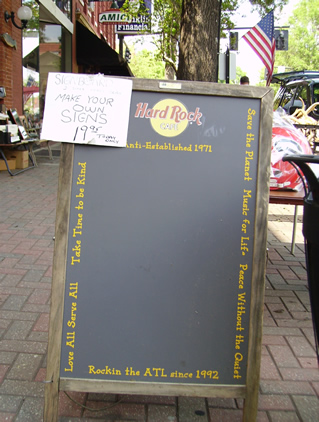
Blackboard Sandwich Board What catches my eye with this sandwich board sign is the clean retro look. The blackboard is also quite functional.
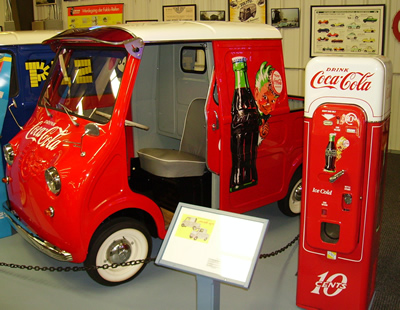
Coca Cola Goggomobil A 1959 Goggomobil Transporter Pickup shrink-wrapped. The graphics reinforce the company’s product.

Marketing: Practice What You Preach

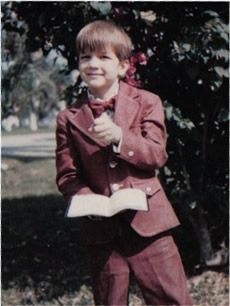
Preacher BoyWhen I meet a professional for the first time, I want to know if they practice what they preach. It’s too easy to tell others to do something. I’m looking for a disconnect between someone’s image and actions.

If there is a discrepancy, I question them to find out more. People will either respond sheepishly “Yeah, I know” or be stunned to think that their image matters. Perhaps I’m more sensitive to this than others, but I want to work with people who are self-aware. I’m not expecting people to be perfect – I just want to ensure they personally know of what they speak.

Marketing is all about a consistent message. How do you answer the phone? How do you respond to emails? What does your website look like? Your brochures? How do you introduce yourself?

When you meet a website designer for the first time… check out their website.

When you meet a search engine optimizer… see how easily you can find their website.

When you meet a graphics designer… inspect their business card.

When you meet a business coach… see how well they listen.

When you meet a marketing person… see how they explain what they do.

When you meet a body worker… see how relaxed they are in their body.

When you meet a realtor… see if they own their own home.

When you meet a teacher… see if they regularly take classes.

When you meet a investor… see if they are personally successful.

When you meet a photographer… see what their picture looks like.

When you meet a customer service professional… see if they use their own products.

When you meet a publisher… see if they wrote a book.

When you meet a gardener… see what their garden looks like.

Next month, I’ll discuss how consistency is important to build your company’s “branding”.